Who doesn’t want to see a cheetah with her cubs up close in the wilderness? Yes? Well then read on…
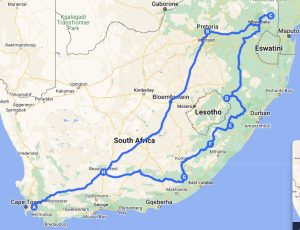
We depart at around 8:00 in the morning from Pretoria for the Kruger National Park. We want to be there long before the gates close and we are also guests of SANParks this time and we do not want to be late. We take the shortest route, the N4 to Bombela, with the usual coffee stop at Alzu near Belfast. They always have a good selection of quality T-shirts and other clothing and stuff you do not always find at other places. We are going to a warm place and I also need new T-shirts for the summer. After Alzu, we move on to Bombela, taking the Schoemanskloof R539 instead of the N4 closer to Bombela because it is an easier road (there are also lots of construction on that part of the N4). We reach Bombela with its 2010 soccer stadium on the right and crossing the Crocodile River a couple of times.
We do not stop in Bombela but turn left on the R40 towards White River. We want to have coffee and cake there. On our way, an old friend calls us from Australia, asking some business questions. It still amazes me, even as an electronics engineer, how easy it is nowadays to contact someone on another continent for free and without any call quality issues! While talking (using the handsfree car kit) I still forget to take my turn to drive at a 4-way stop – I now understand why most people drive like idiots! In White River, we stop at Yoons Eatery where they spoil us with vanilla and cheesecake and good coffee. It is a stylish place with friendly staff. At the next door Checkers, I strike up a conversation with the pharmacist on duty, a professional African woman, who is concerned about South Africa’s government (or mostly lack thereof!). We agree to help balance the competing political parties by voting for someone other than the ruling party next year.
We are now on our way to Hazyview on the R40. We can see some damage due to the flooding the Low Veld had during late summer, but it is not too bad here. Entering Hazyview is a bit of a different story with the left lane of their main road almost undriveable because of heavy trucks over the years. Two guys with caravans, most likely on their way to Kruger, are struggling to keep them on the road in one piece. We refuel there, not because our tank is empty, but because I believe diesel will be more expensive in Kruger. I later learnt that this is not true – kudos to SANParks!
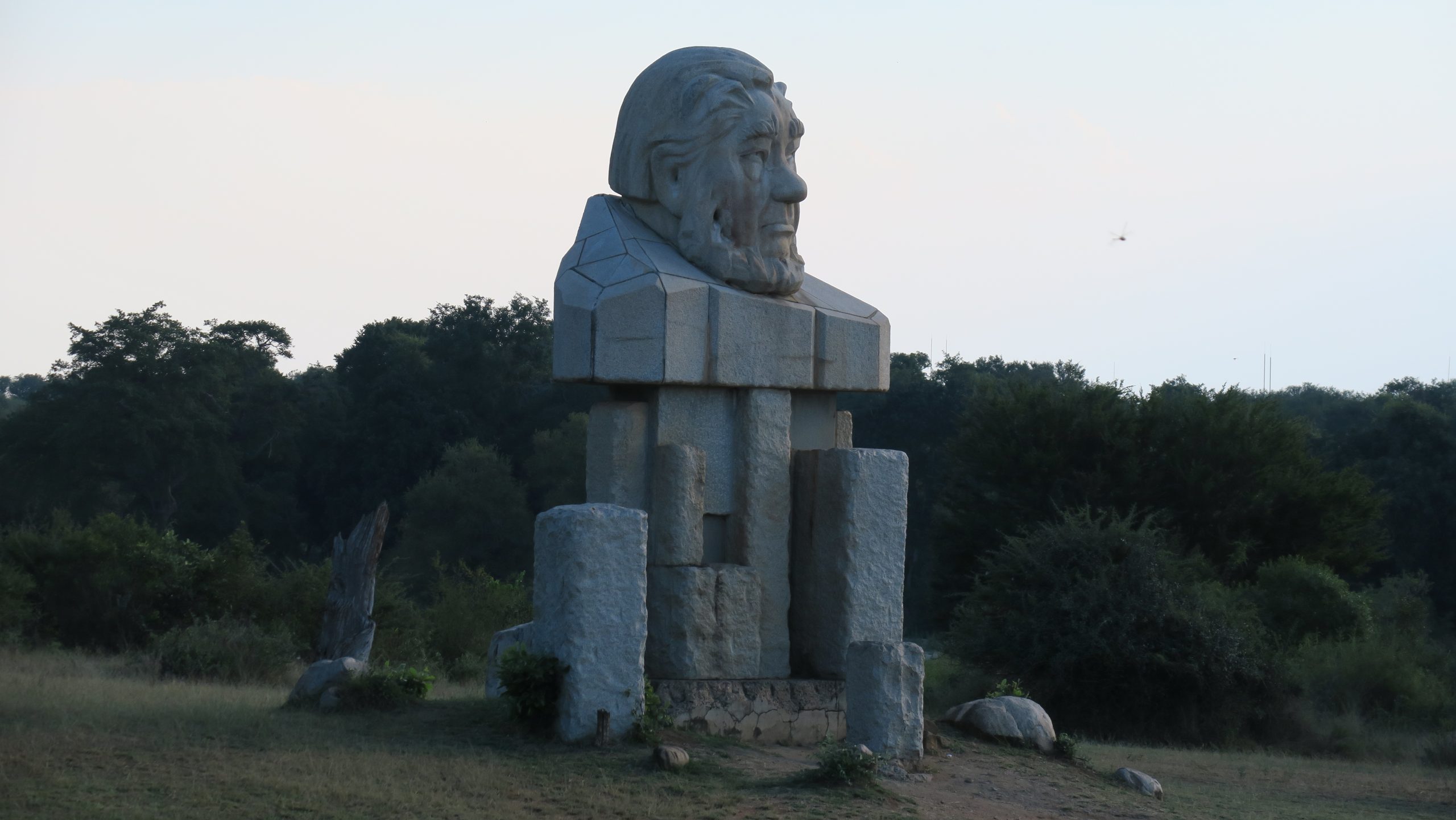
We leave Hazyview for the Kruger Gate and we are making good time. You have to drive past many rural villages and speed bumps force you to drive slowly. Yet quite close to the Kruger Gate, as the opportunity presents itself for you to drive faster again, we are signalled by a traffic cop to pull aside. We are doing 71 in a 60 area, so strictly speaking, we should be fined. After some friendly exchanges and smiles we are allowed to carry on without a fine. I think if you either take an aggressive or unfriendly position or you attempt to bribe the police officers, you set yourself up for serious disappointment. We cross the Phabeni River just before the gate. On the right-hand side you can see the towering statue of President Paul Kruger after whom the park (and main gate) was named. We report at the gate office where our special entrance permit as business visitors is quickly processed. I was a bit disappointed at the overall impression the main gate of Kruger left – the gardens are not maintained at all and will make the unintroduced overseas tourist worry if the accommodation and other facilities are in the same condition. Fortunately, this is not the case. I understand the budgetary challenges SANParks has had since COVID, so it makes sense to maybe save on gardening, but there are so many people living close by without a job who, I believe, will do anything to earn a couple of Rands. And later in this tour we will be visiting some Ezemvelo KZN Wildlife parks and their gardens are meticulously kept.
We report at our accommodation near Skukuza and have a wonderful time in the wild. It is an honour to be part of this proud and world-famous institution. We are housed in special accommodation outside the camp and we are much closer to the bush. I am braaiing outside our house (still behind a fence though) and, although it is a full moon, I look around a lot because there is no one close by to call for help if something threatens us. Eventually I relax – not sure if it is the red wine that does it for me! The next morning the staff tell us that there must be a puff adder nest close by because they came upon a juvenile just behind our house! Clearly, I was looking for danger from the outside instead of the inside!
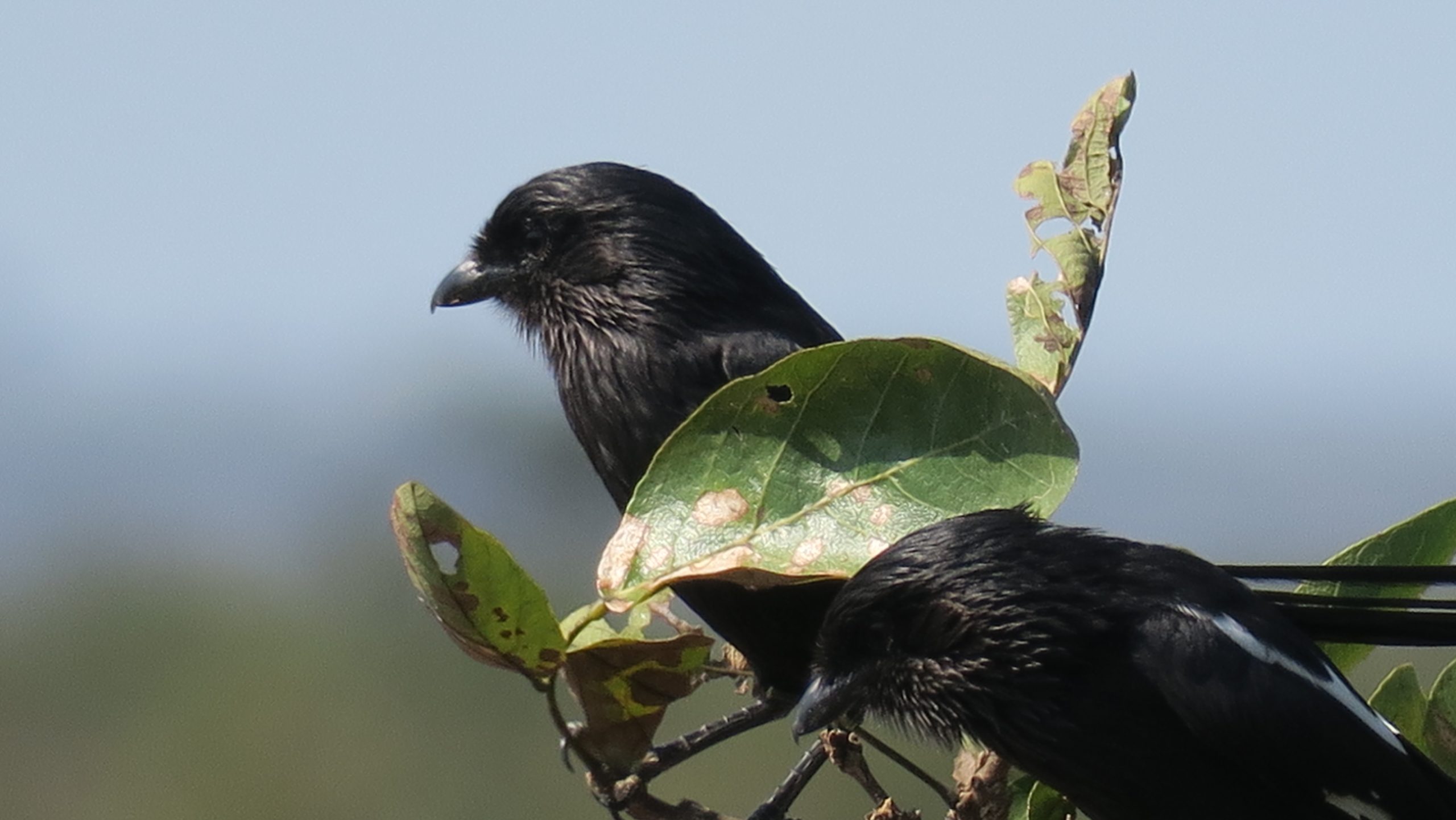
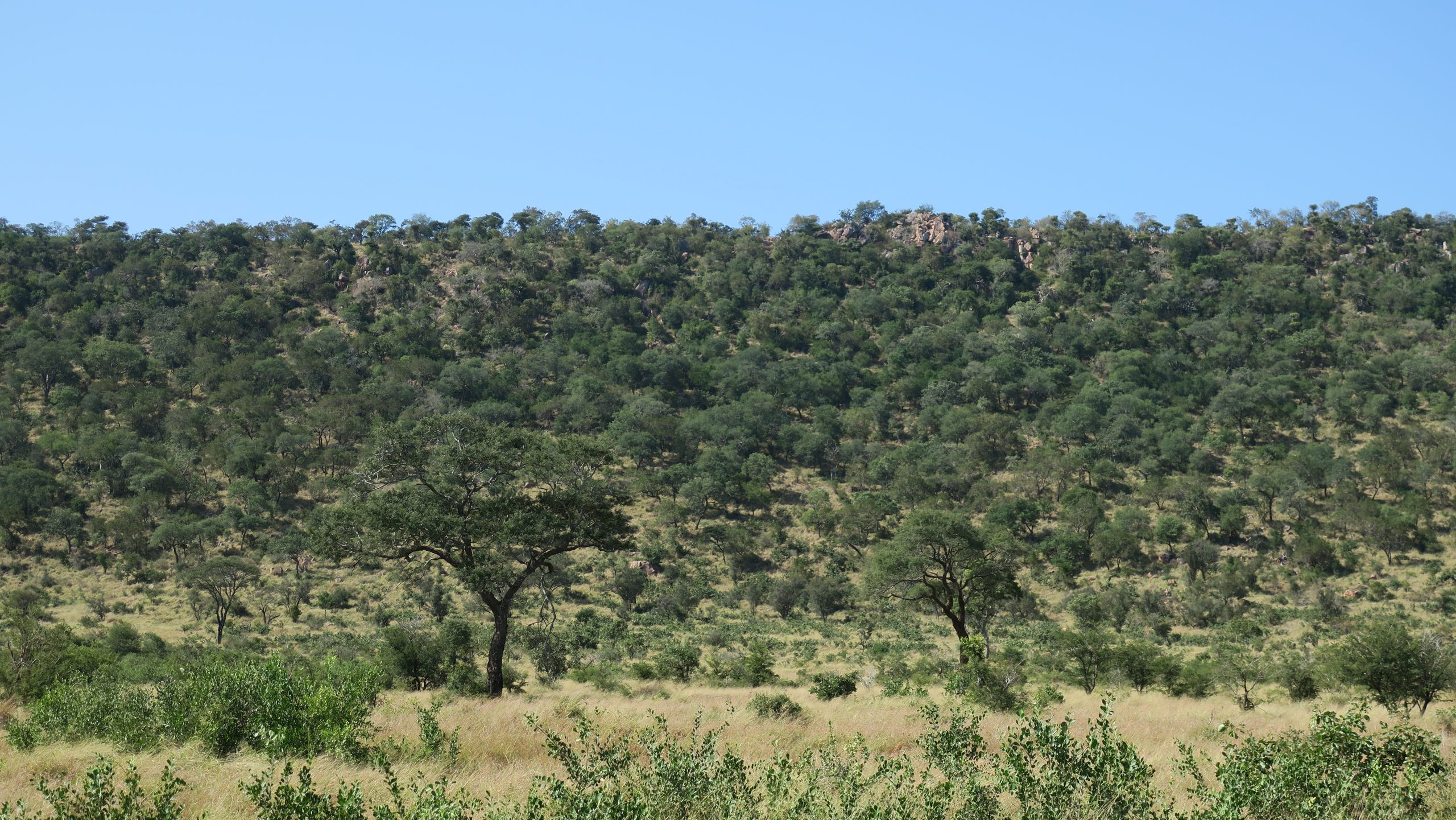
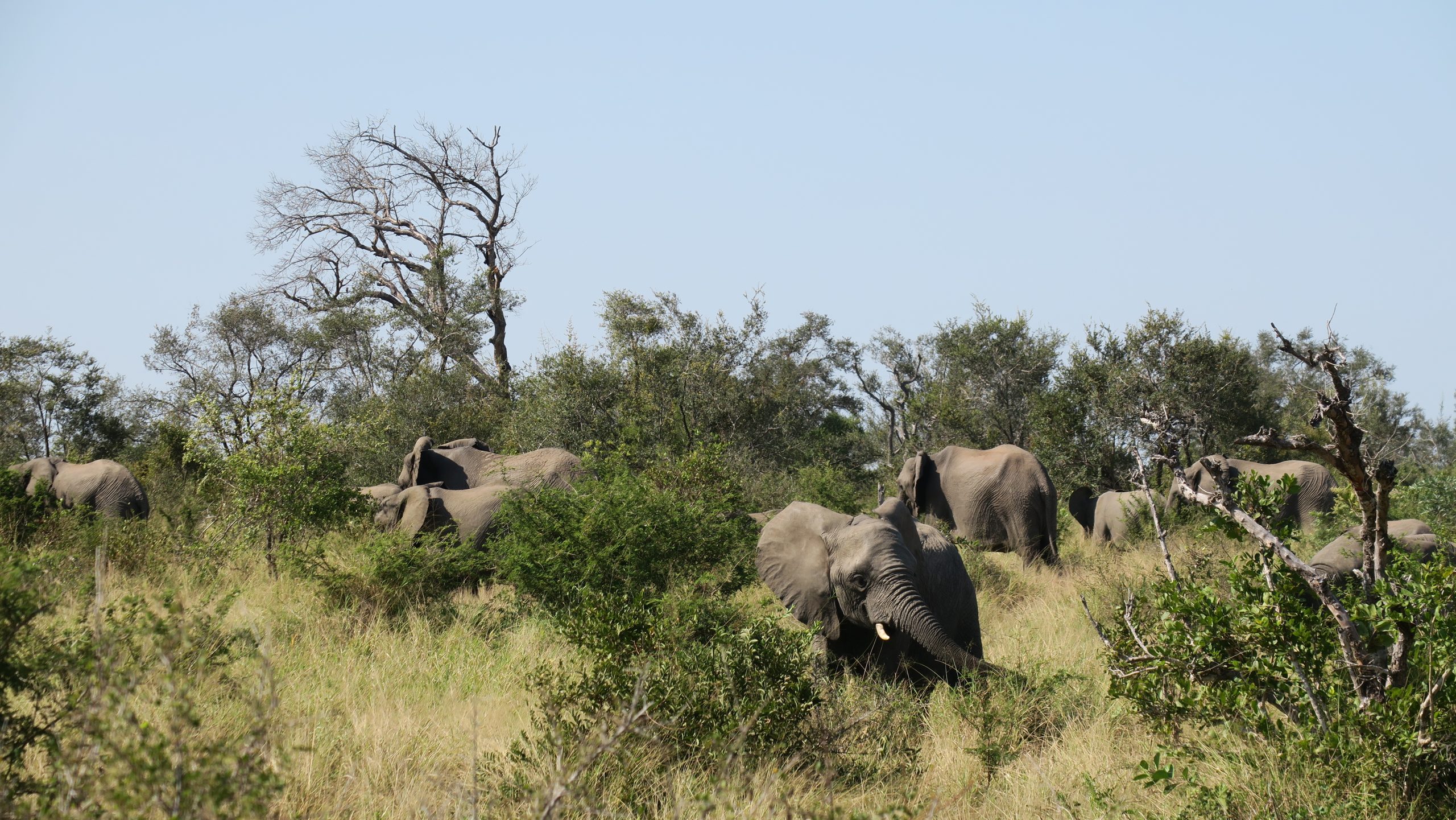
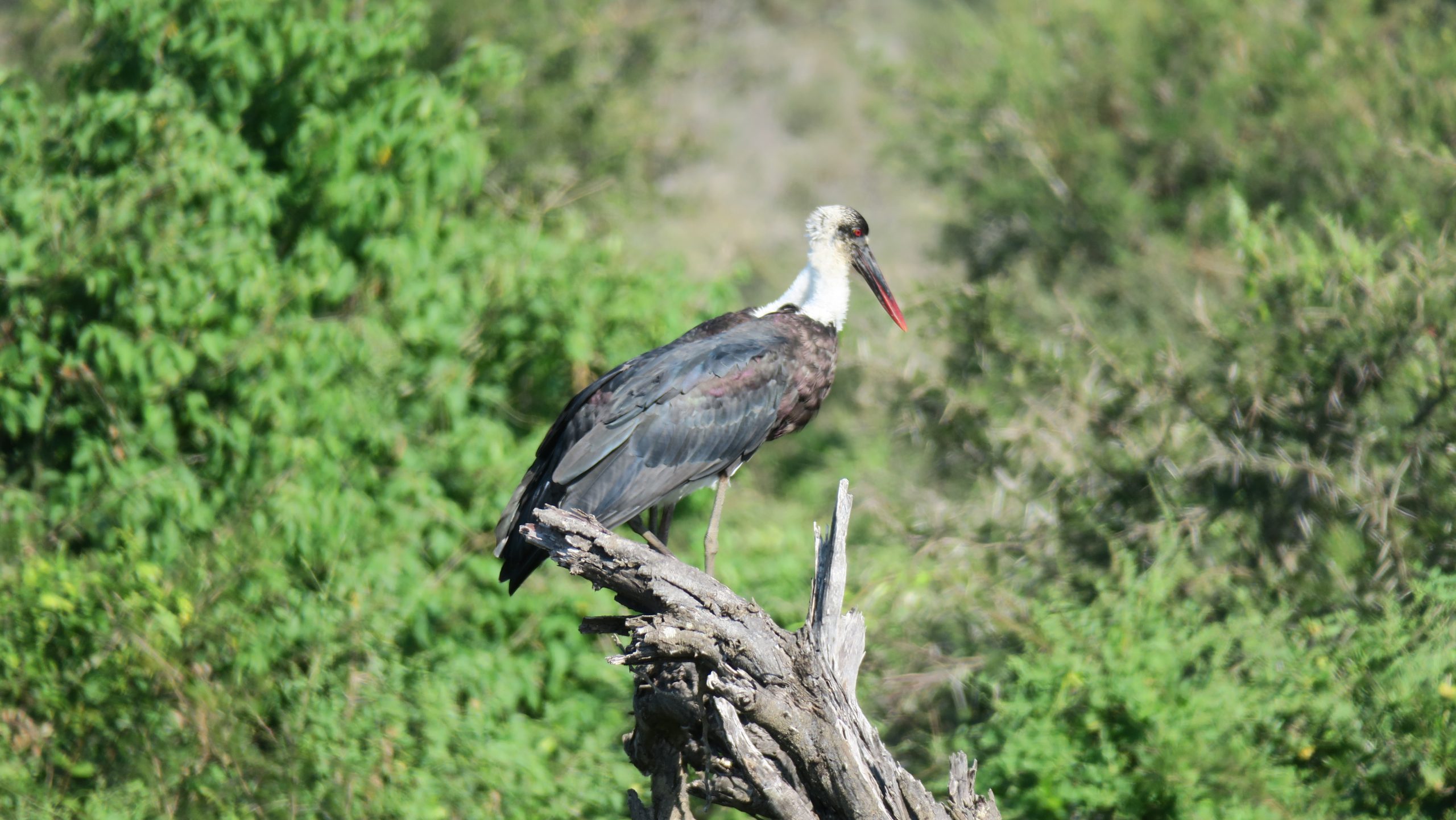
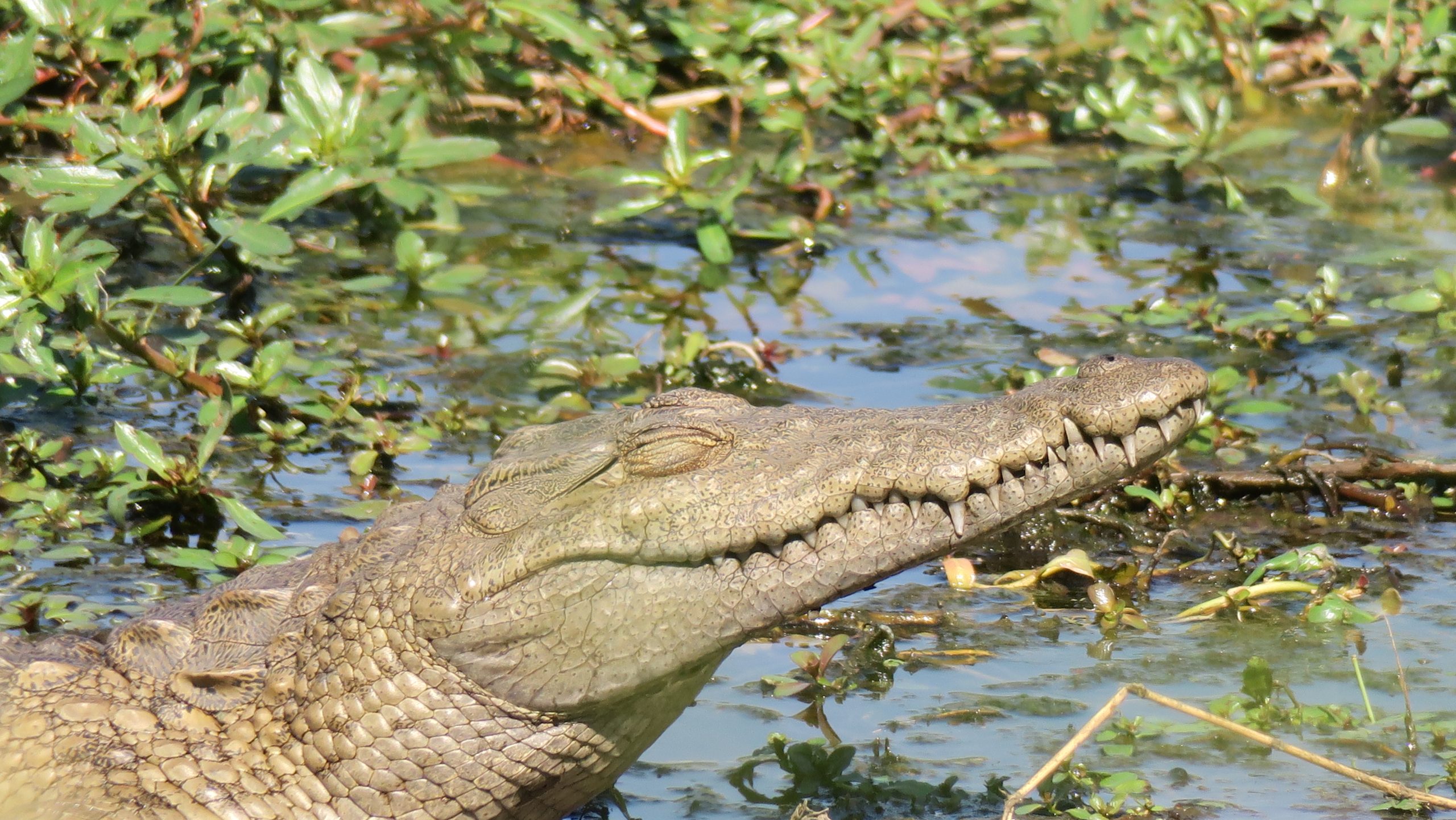
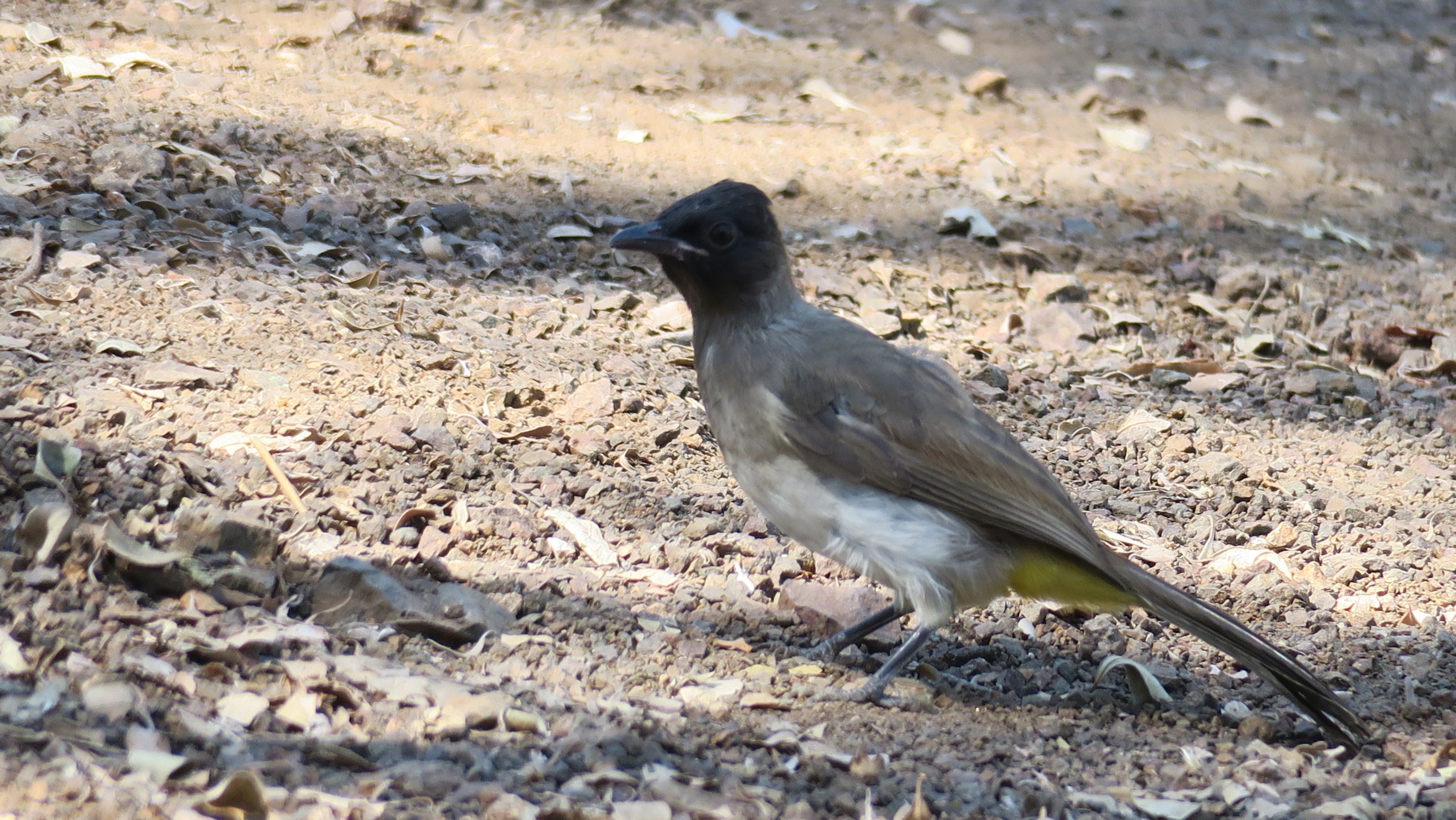
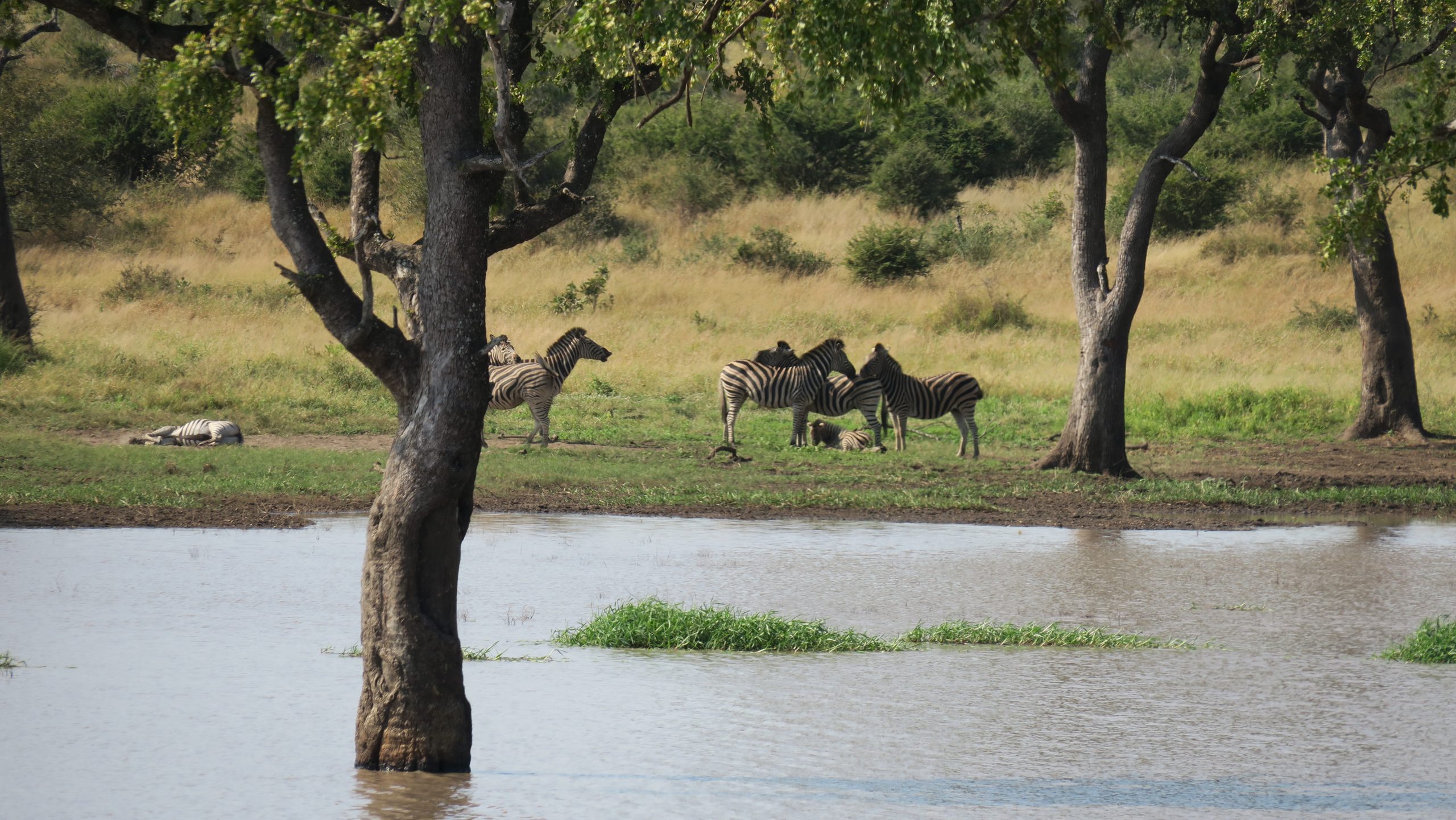
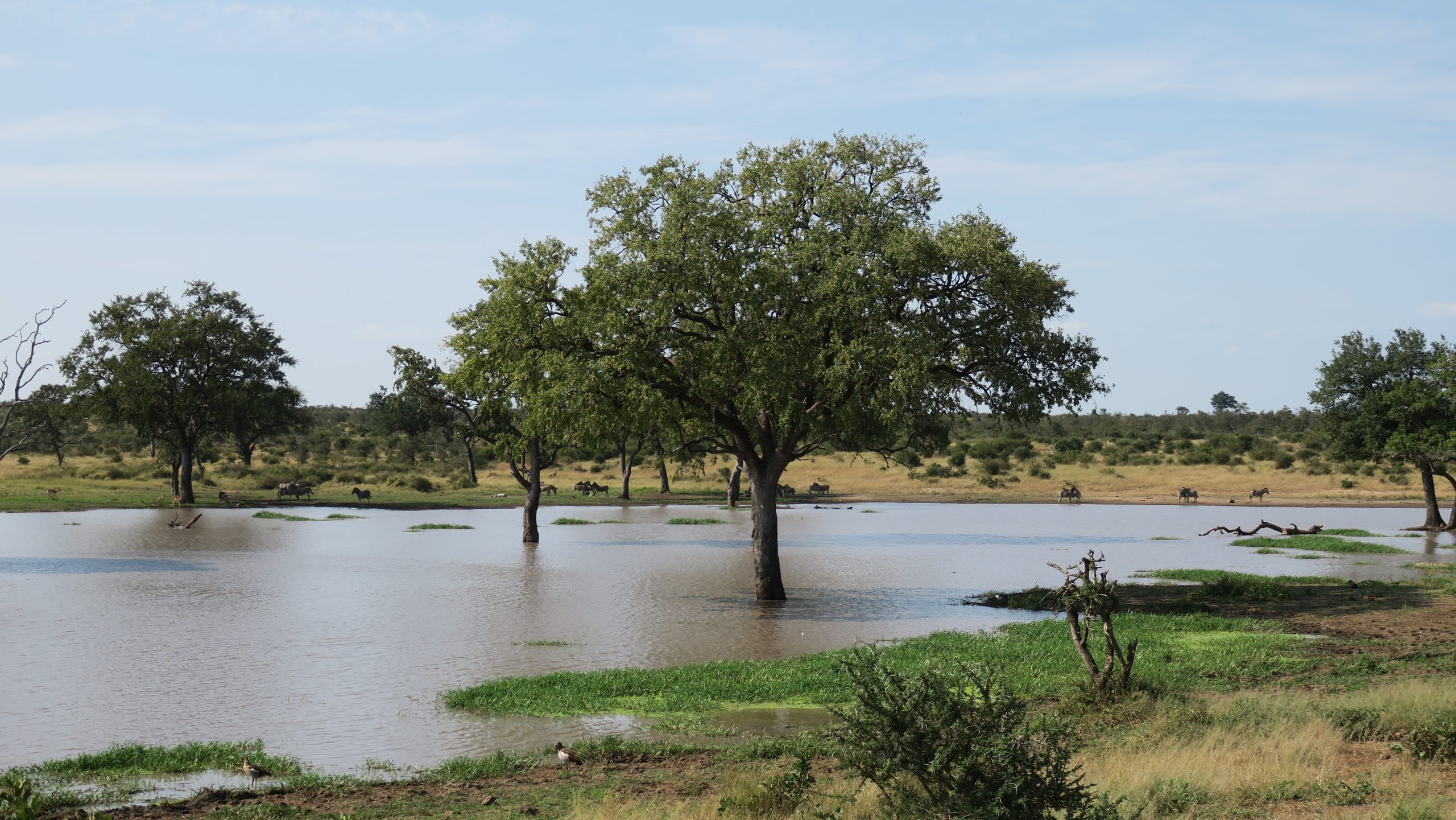
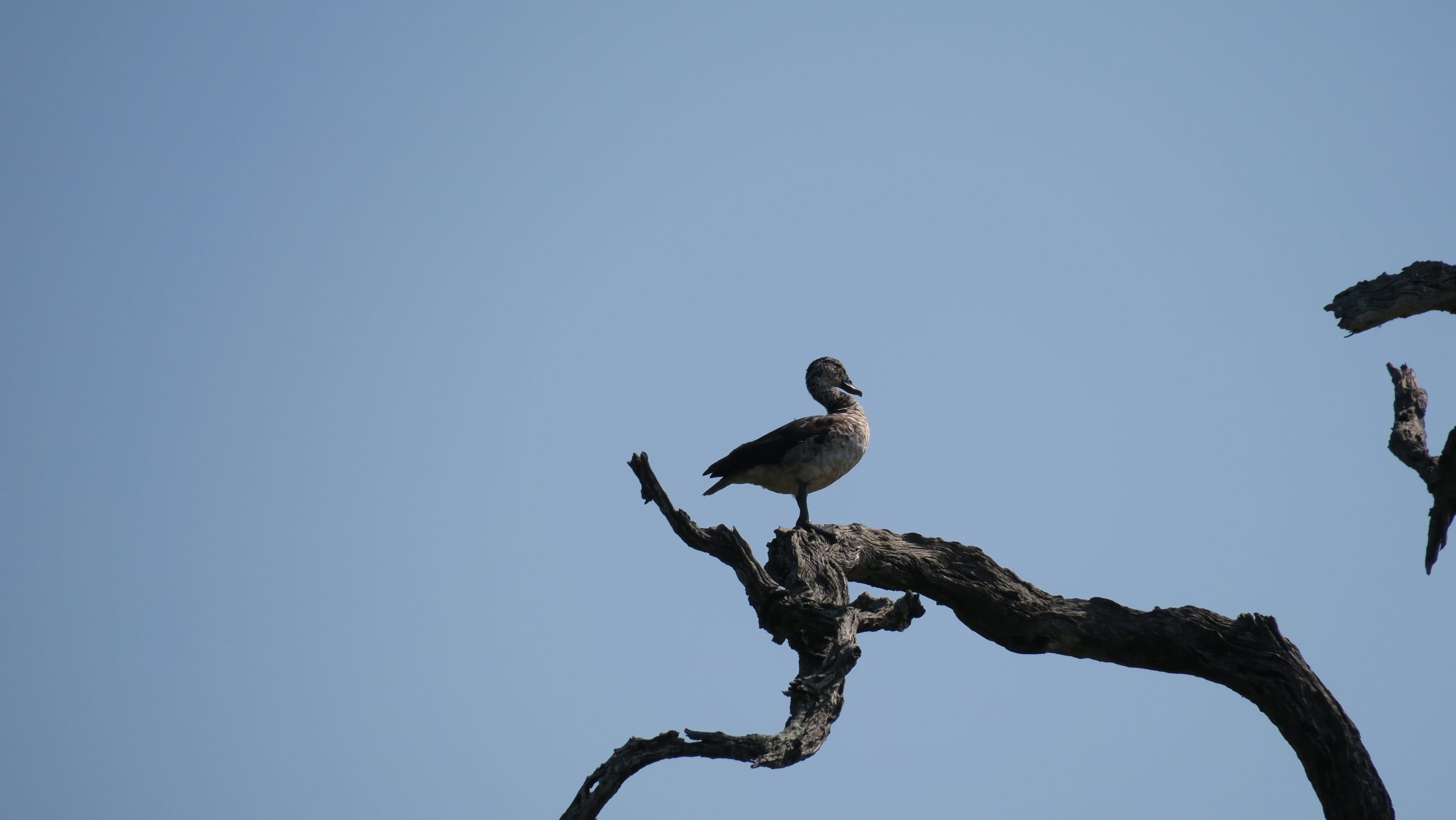
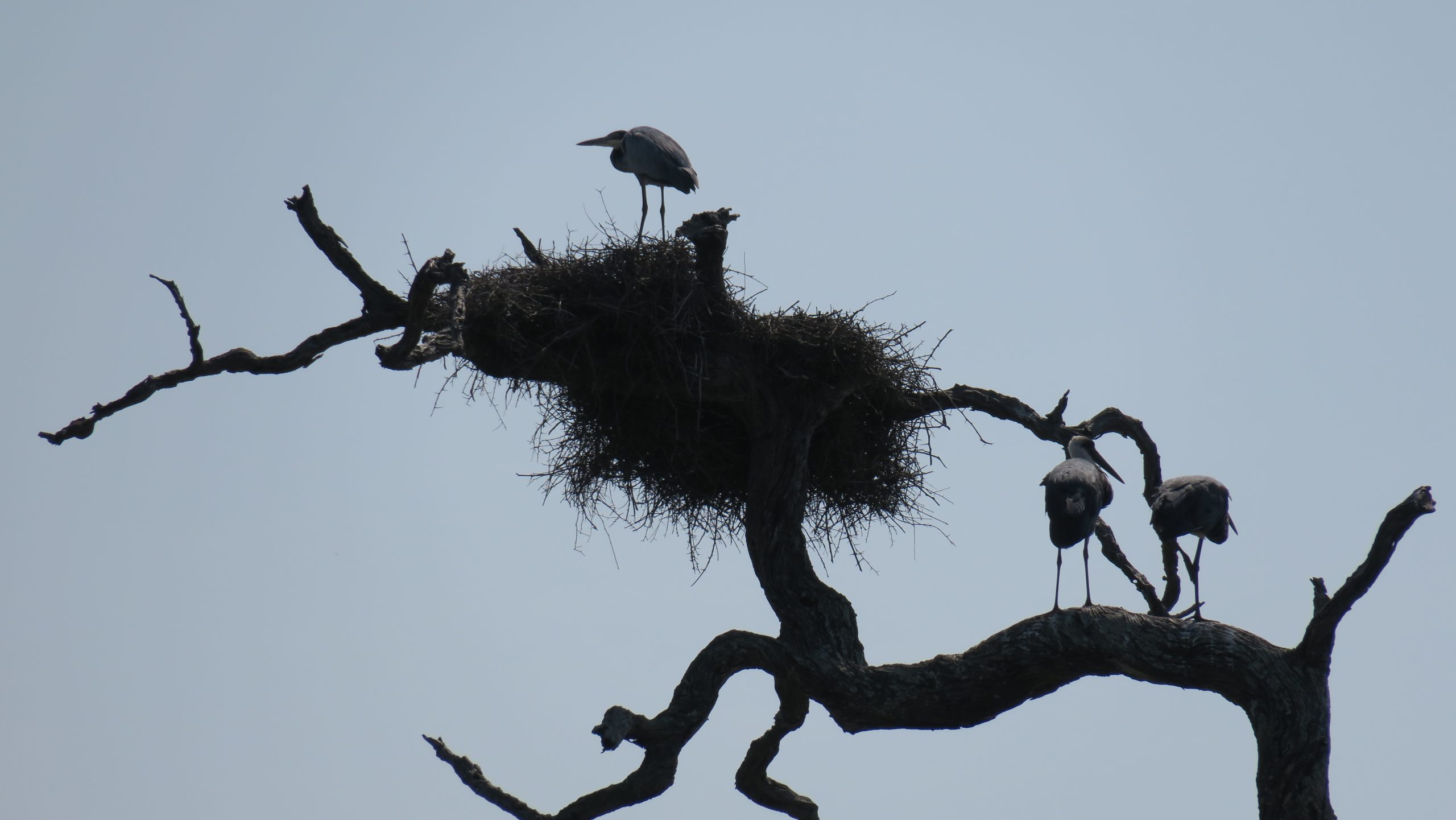
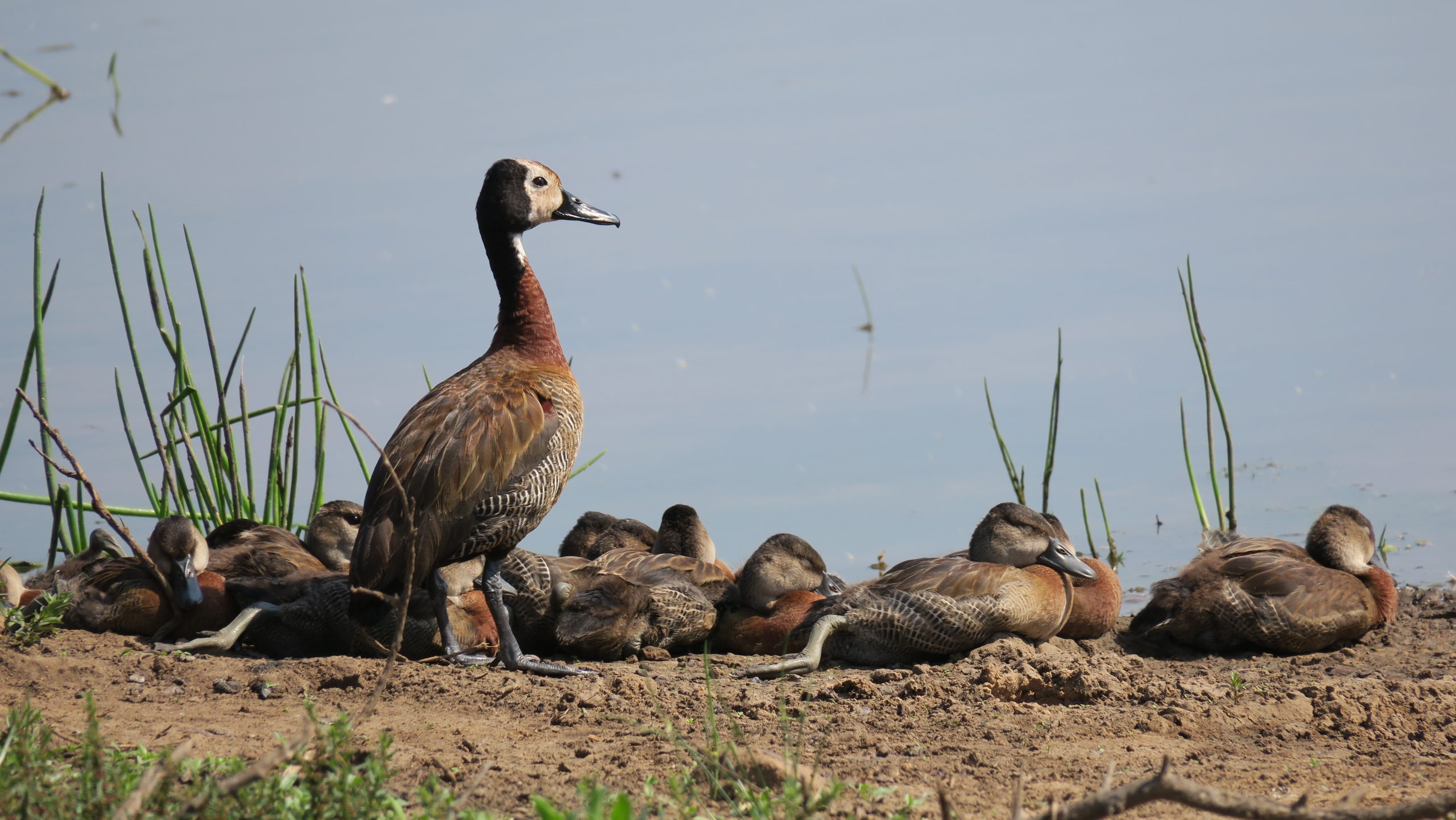
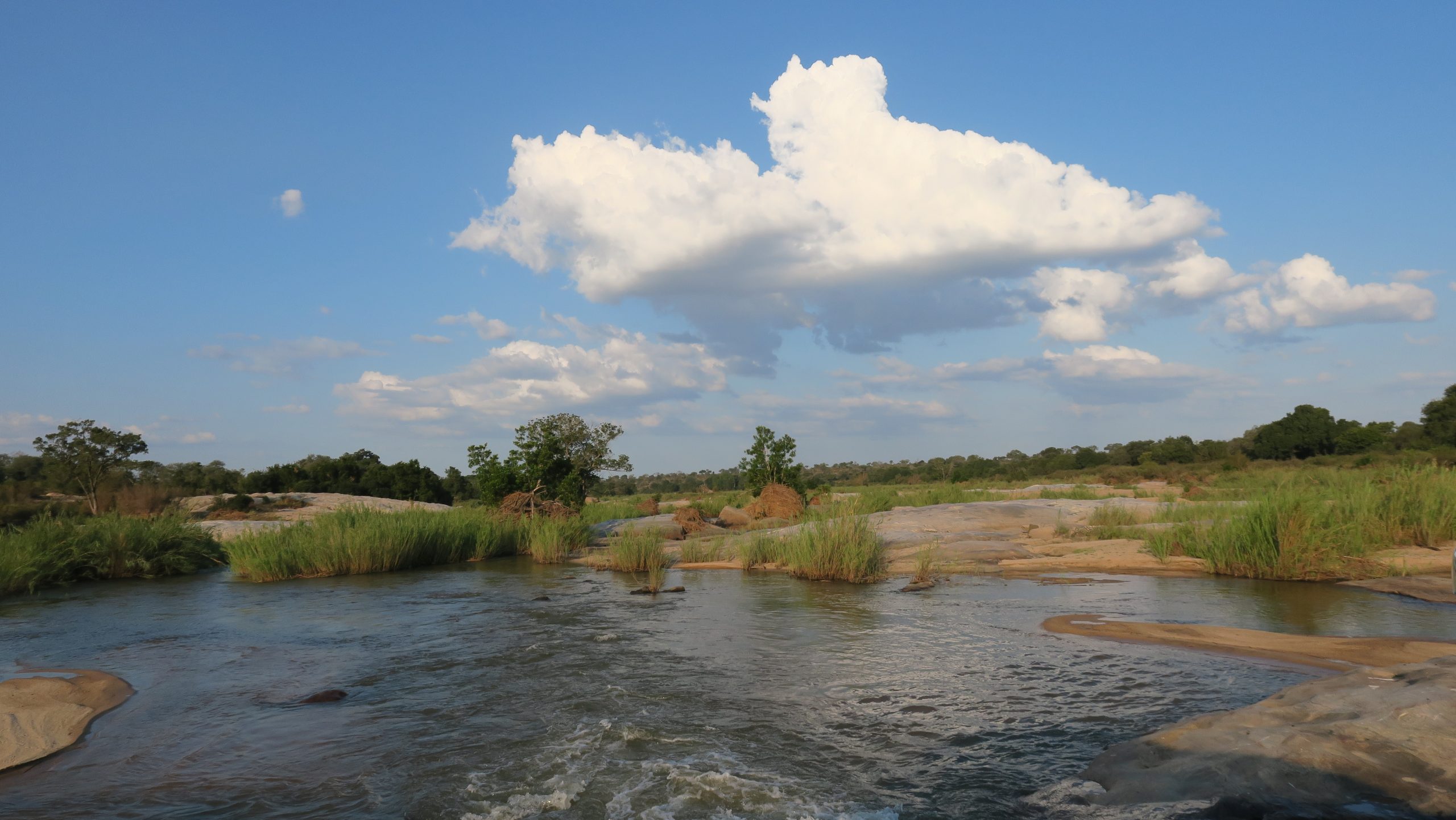
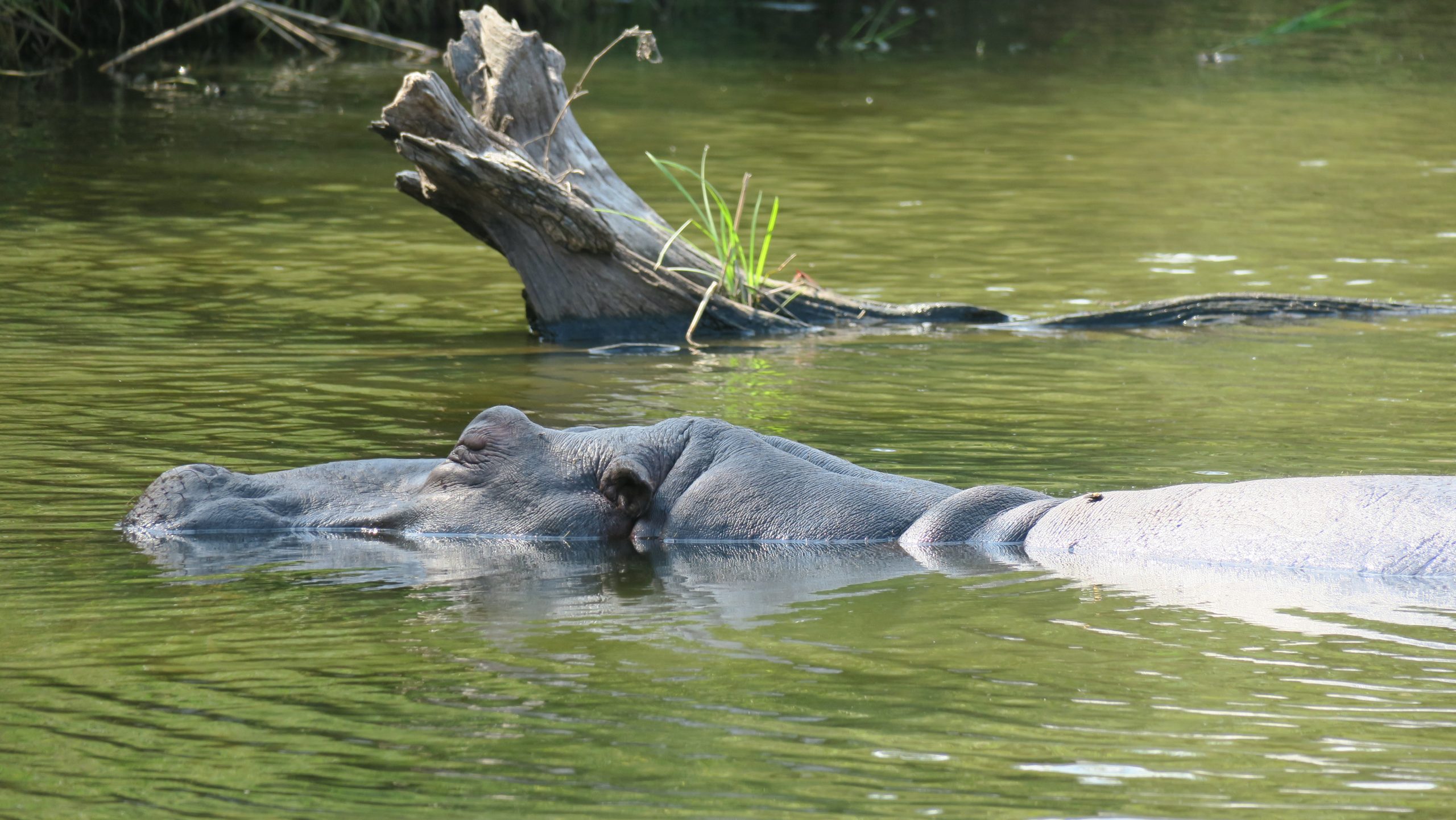
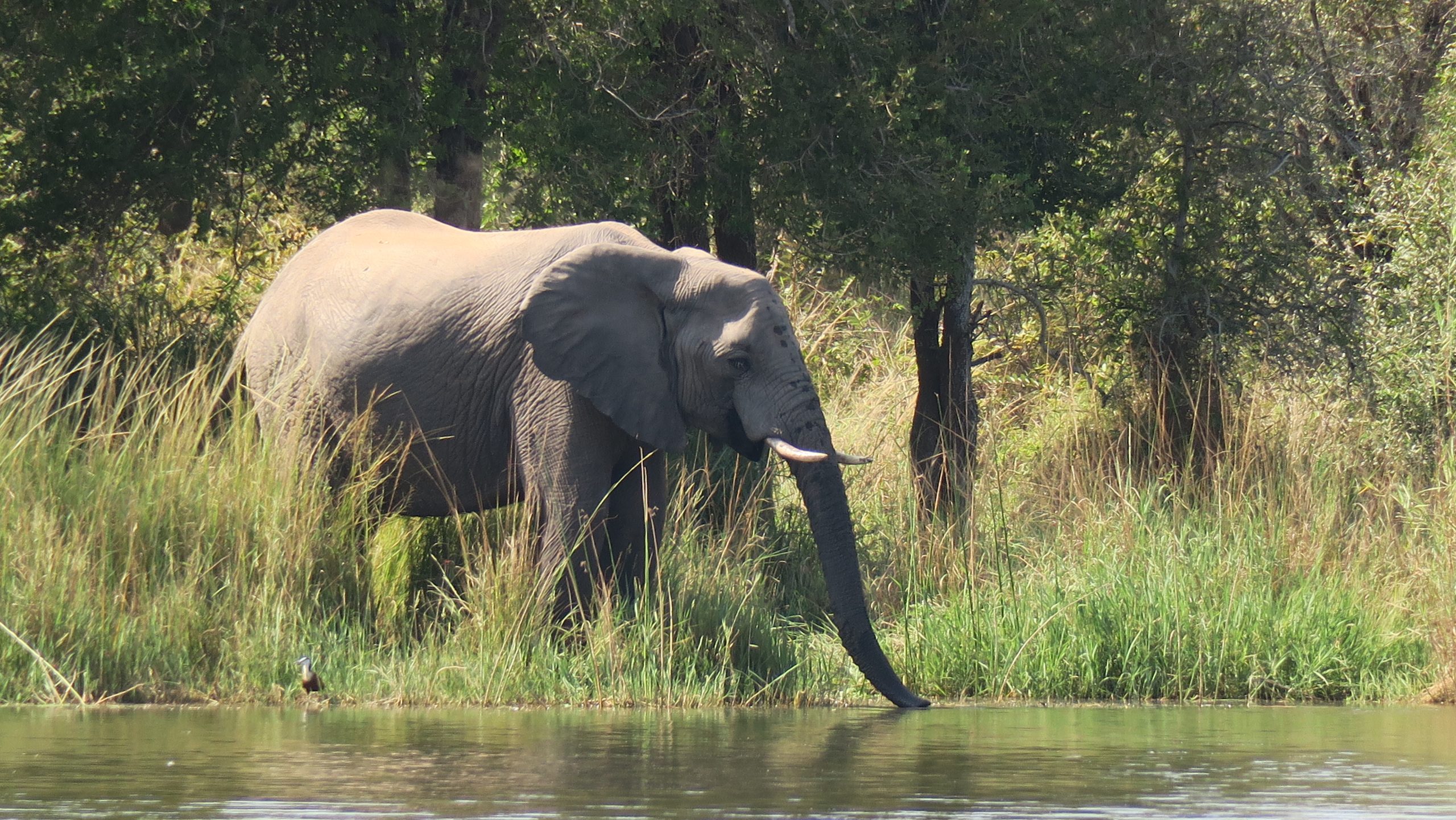
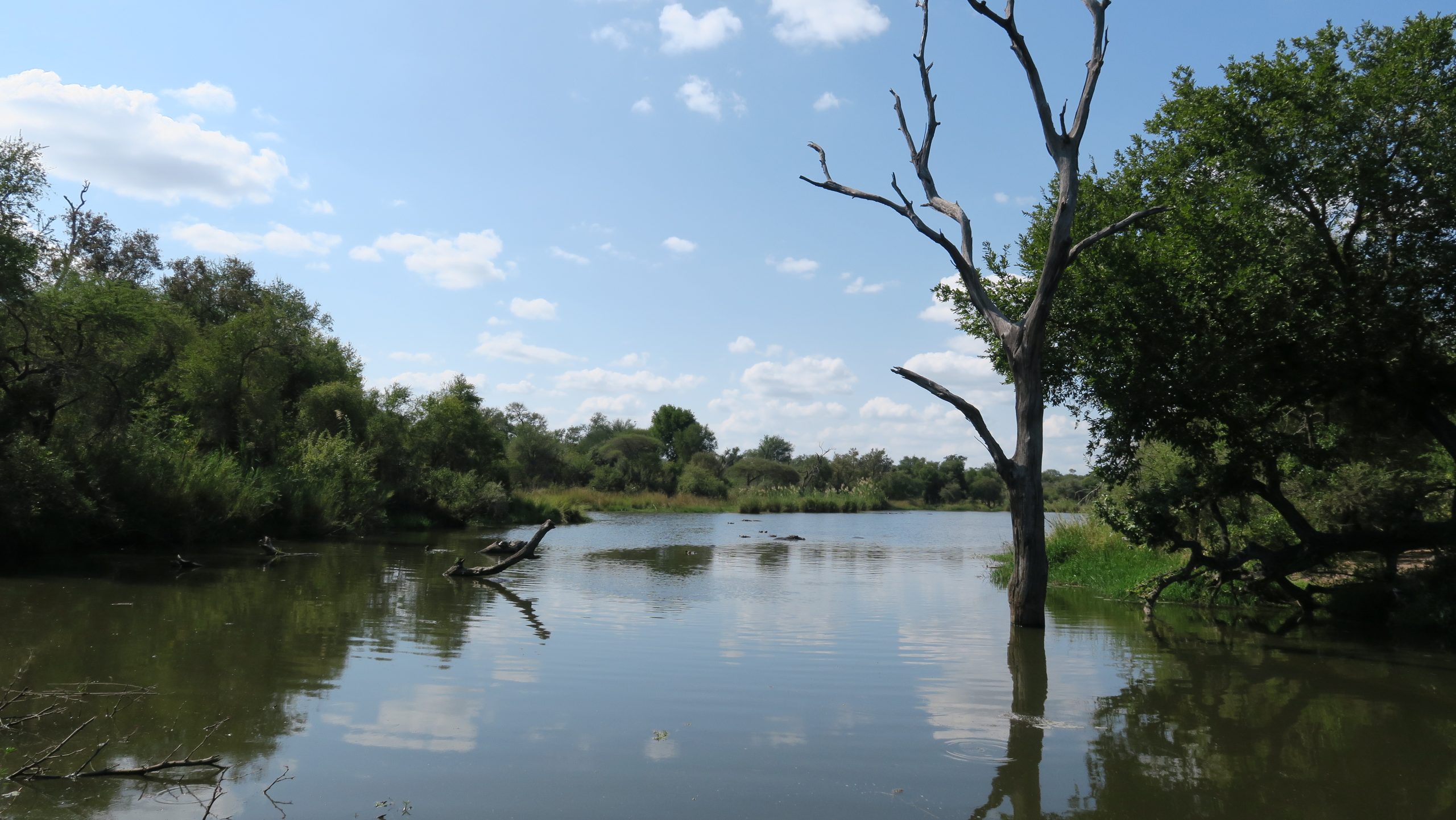
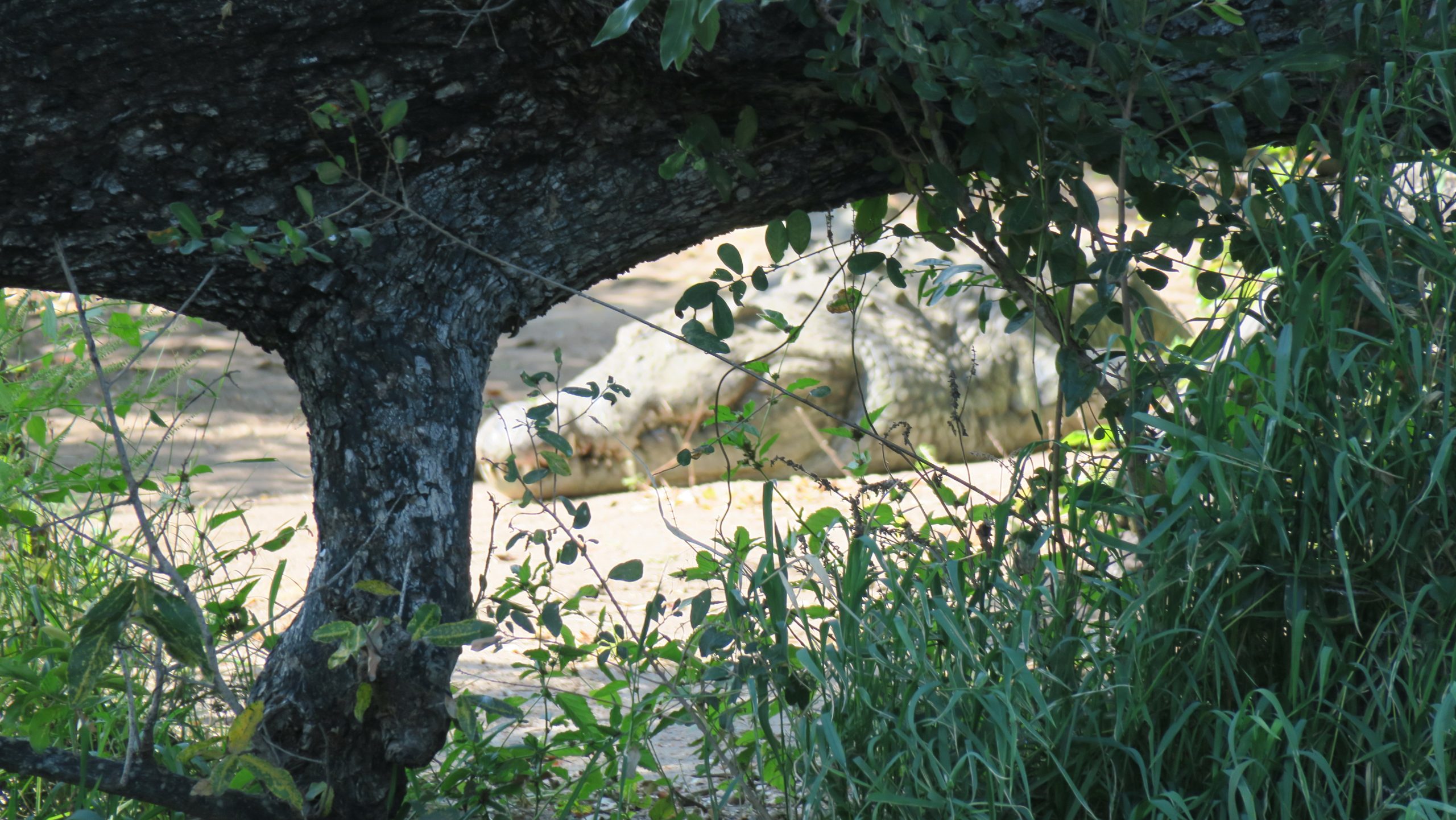
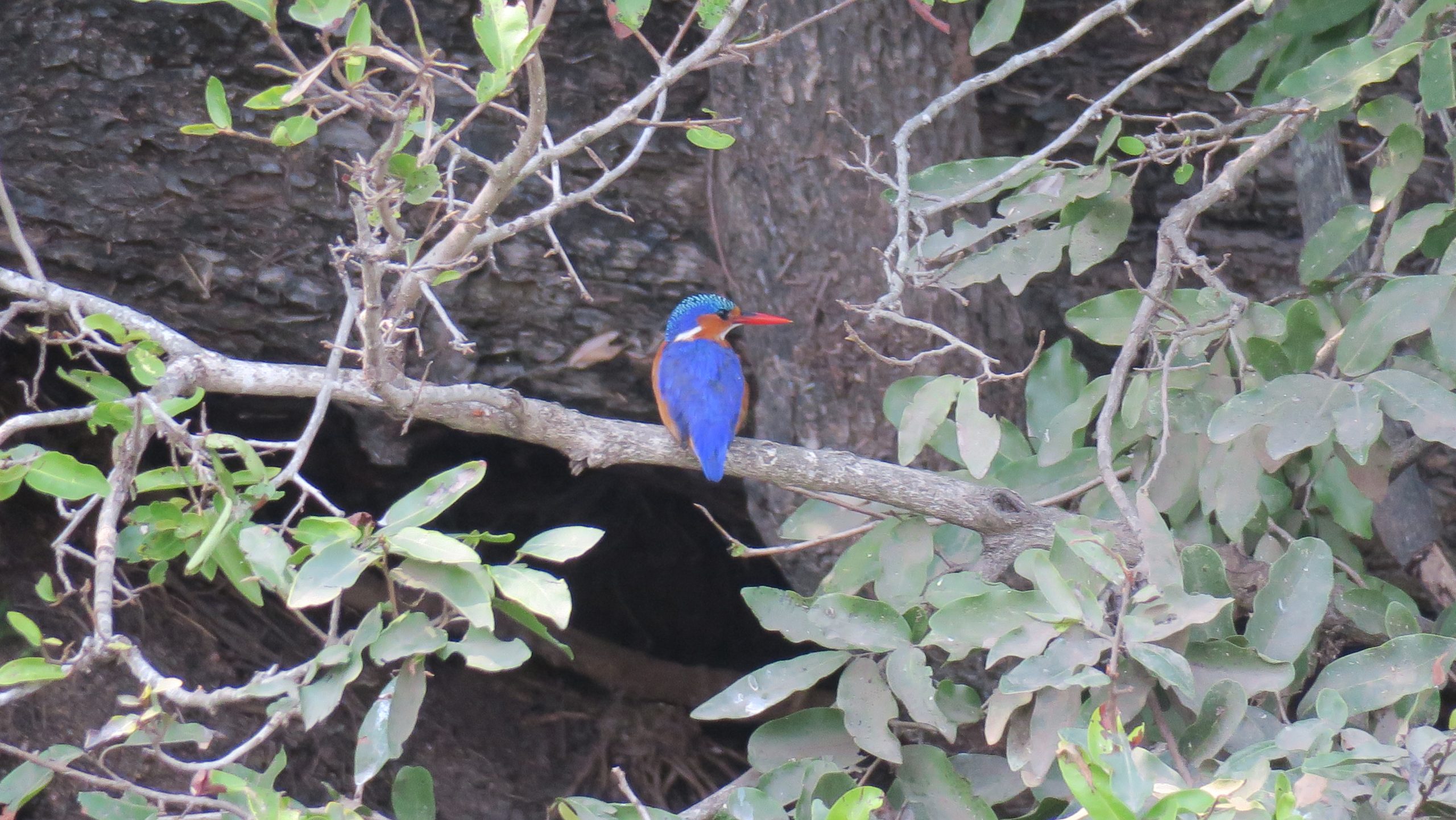
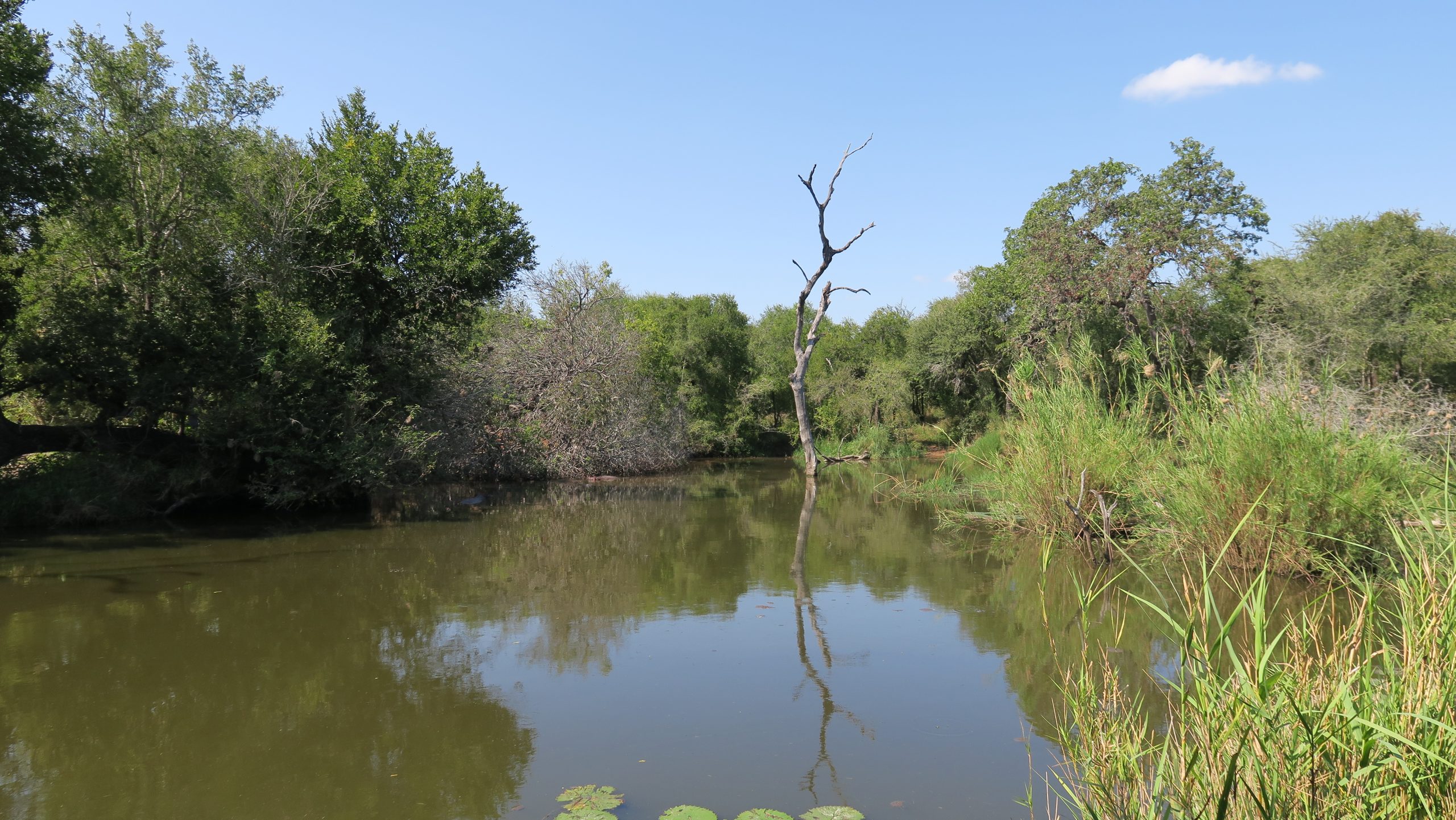
The grass in Kruger is still very tall after the heavy summer rains and it is difficult to see animals. In fact, we did not see a single lion during the entire 5 days we were in Kruger – a sign of how difficult it was for us in the tall grass. We did see elephants, crocs, hippos and many different birds near Skukuza. The main road between Skukuza and the Lower Sabie camp is still closed due to the flooding. Anette visits Lake Panic, a famous birding spot near Skukuza, while I attend my business meetings with SANParks staff. By pure coincidence, she runs into one of her cousins from Mossel Bay in the bird hide.
After 2 nights we depart for Satara, having coffee and succulent buffalo pies at the Tshokwane picnic terrain. This is a classic stop – just beware of the very clever and agile monkeys who will steal your meal before you can say a four letter word. From here we continue towards Satara, a camp which is known for its lions and other predators. Wo do come upon a commotion of traffic but it is unclear what they are seeing (if anything). What sometimes happens is that someone sees something interesting (could be a bird!), stops, which then attracts other cars and a long time after the sighting has disappeared, people are still arriving and looking to find what is not there anymore. Usually, if we cannot see what is going on, we move on quickly. Seeing rare sights in Kruger is more a matter of luck than skill.
In Satara we stay in one of those classic rondavels with the kitchen on the stoep. All the rondavels are grouped in big circles and face each other across a wide open area. Still quite private. We were lucky to find an open rondavel at such short notice, but here we are. Early evening braai and a glass of red wine while only in a T-shirt and shorts is what I collect for memories when I’m here. Exotic birds singing and the far-off roar of lions round off the experience.
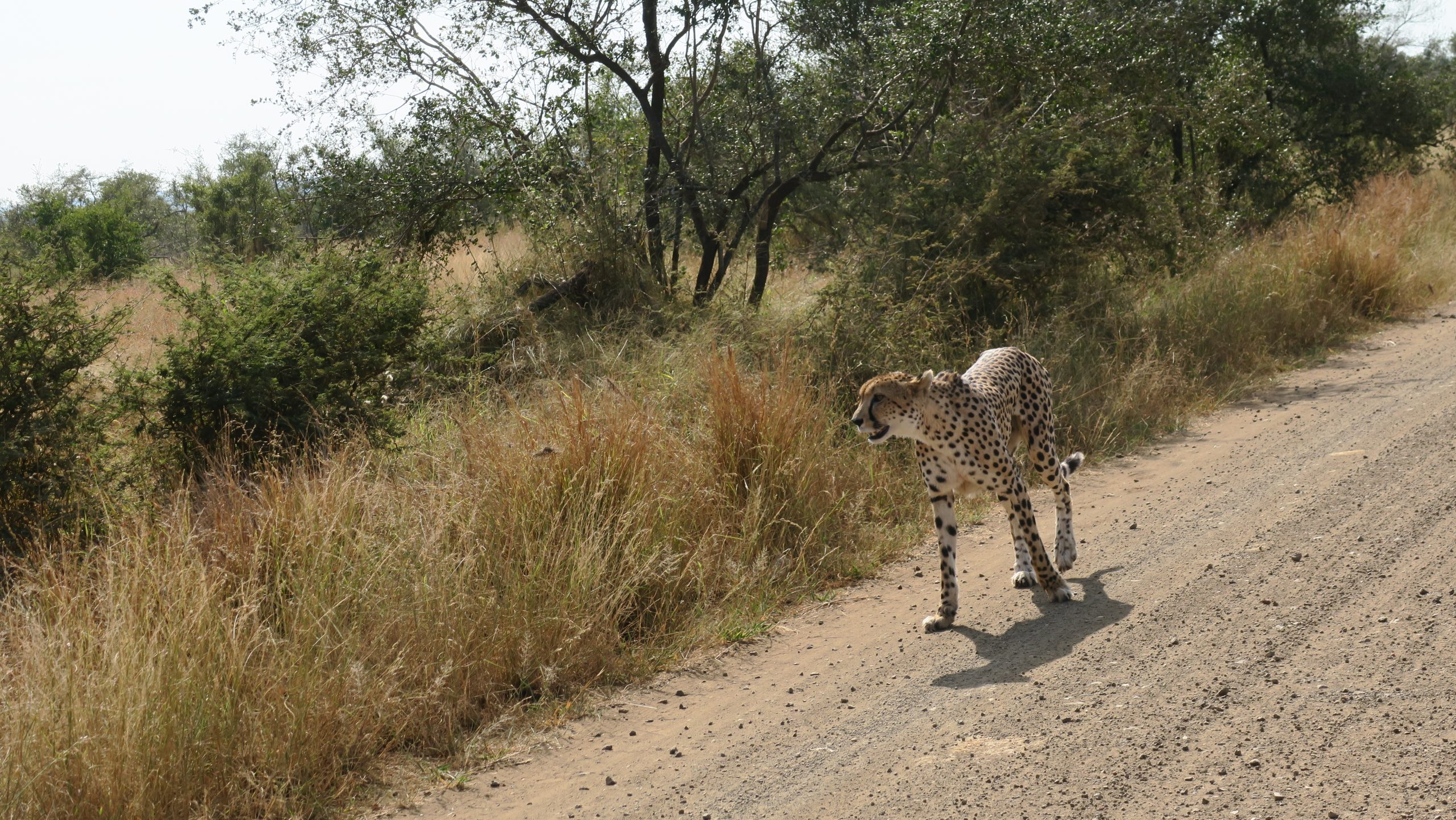
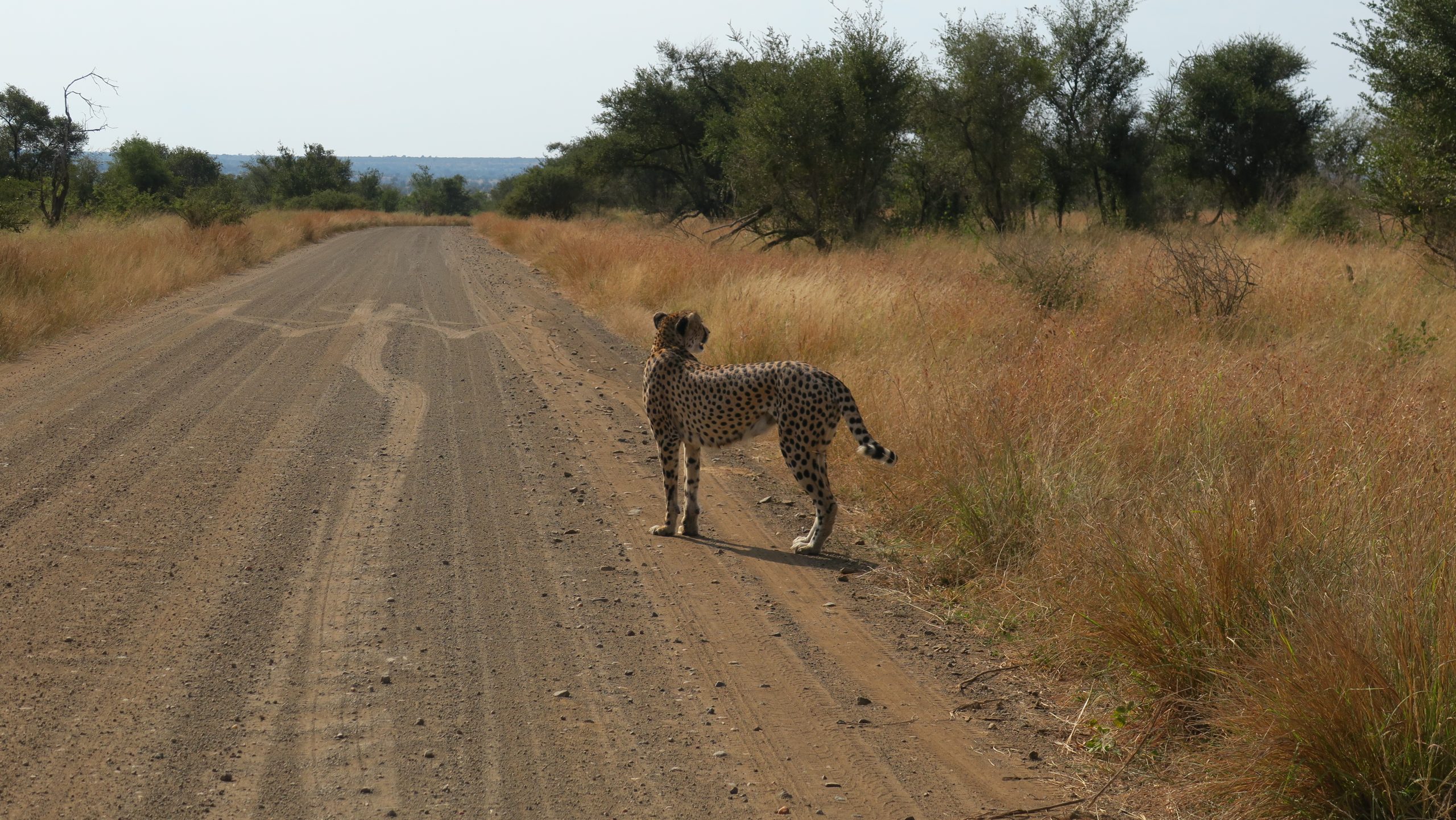
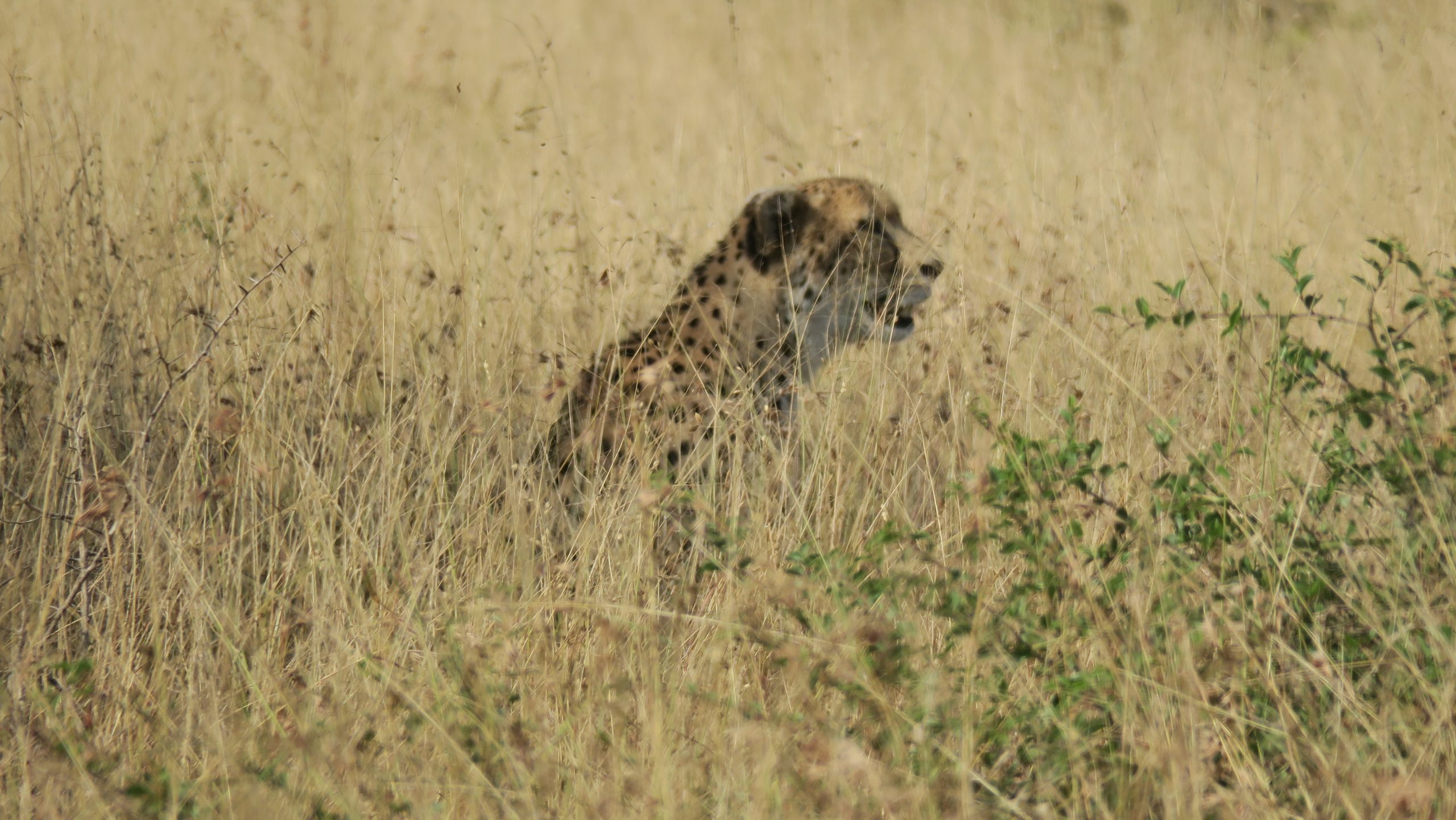
The next morning we depart for the N’wanetsi picnic terrain. We take the S100 and not the H6 (which is tarred) because it is one of the roads to take in Kruger if you want to see lions and the like. It winds up the N’wanetsi river and we are driving very slowly. Close to the end of this road I suddenly notice a head protruding from the tall grass! We see so many broken-off tree trunks that resemble animal heads that look out from the grass, but this time I know it is different! My initial thought is that it is a leopard but taking a second look confirms it to be a cheetah with those black “tears” running down the cheeks. We reverse slowly, following the cheetah’s disappearing and reappearing head in the grass, noticing that it is moving towards us. Eventually it appears on the side of the road right in front of us, then stopping in the middle of the dirt road, observing around it. And then, to our utter surprise and delight, three small cubs also appear and start to cross the road. They were so small that we never noticed that they were following their mother through the tall grass. She approaches us and then disappears into the grass on Anette’s side of the car. One minute since appearing and they are gone like they were never there in the first place. See what I mean by luck?! Trying to take photos while trembling with excitement is another challenge!
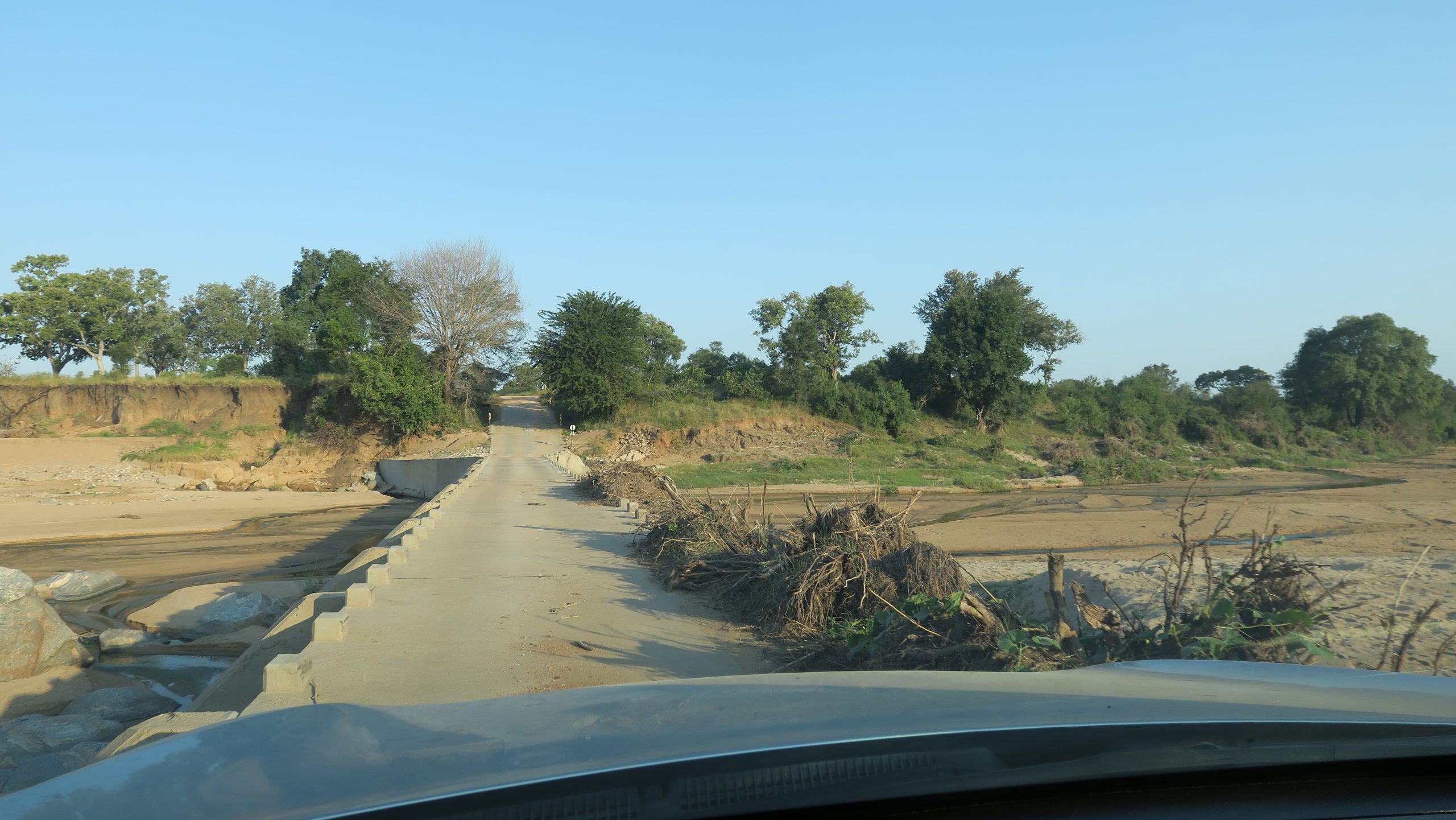
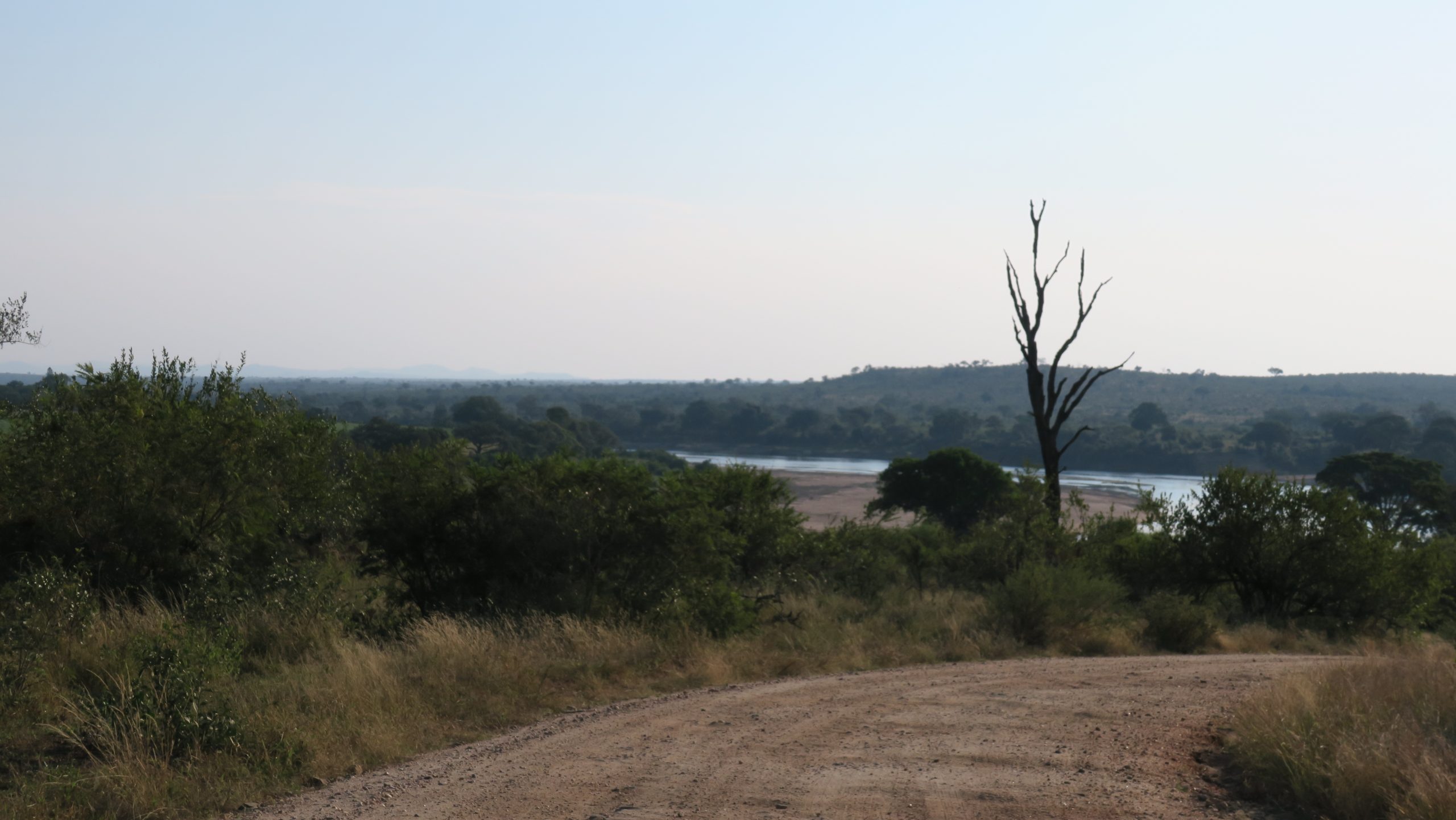
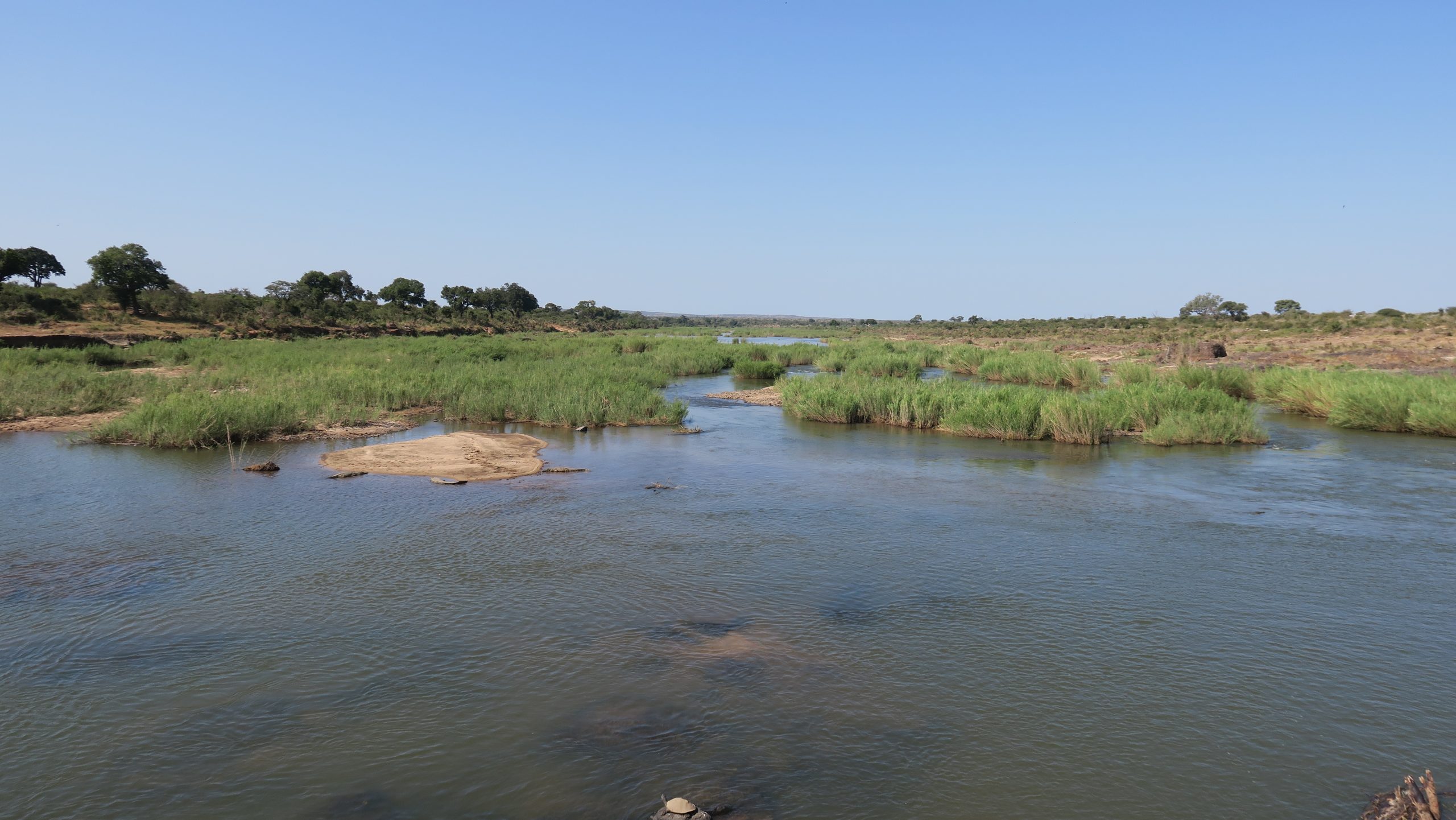
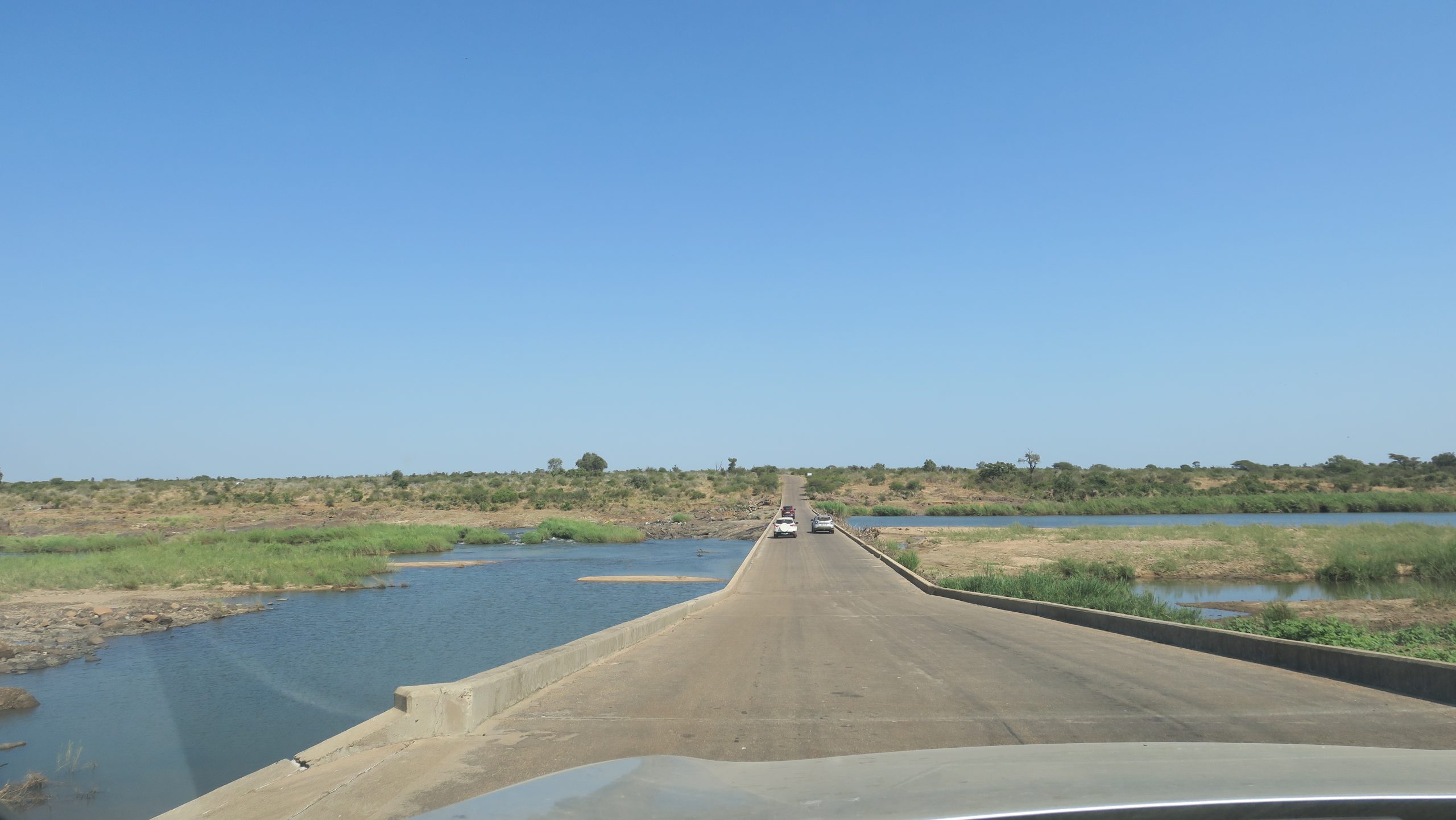
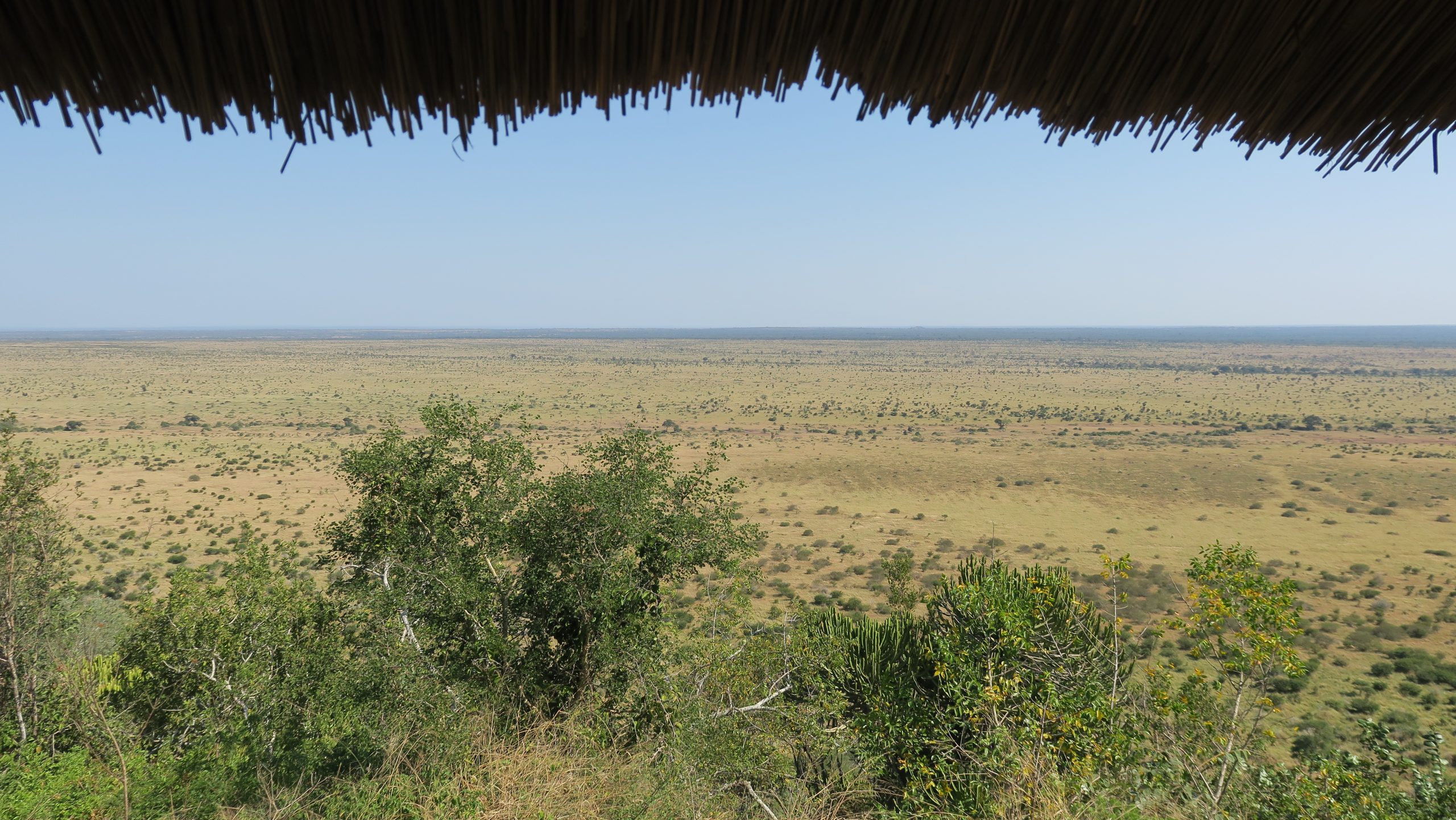
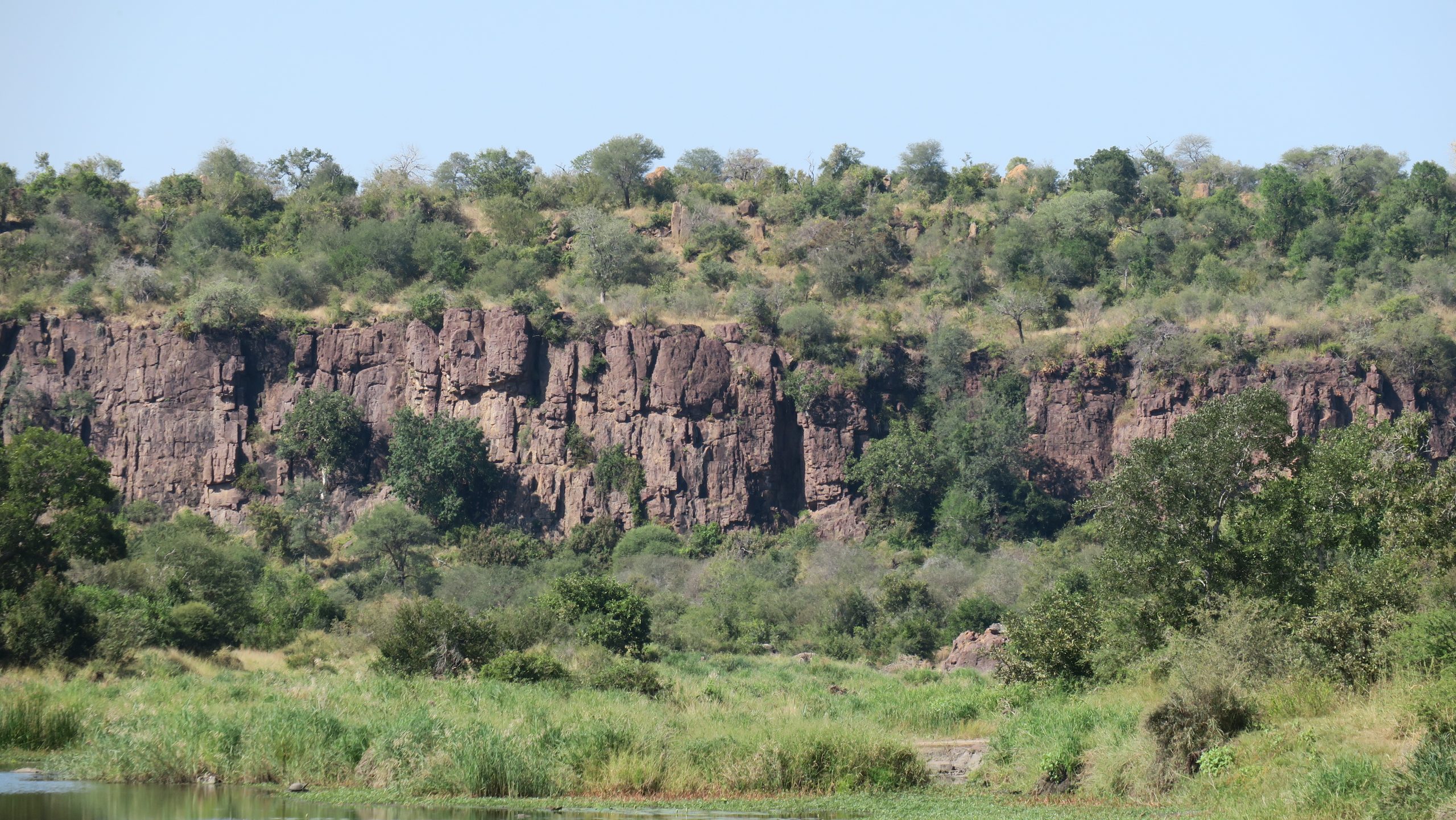
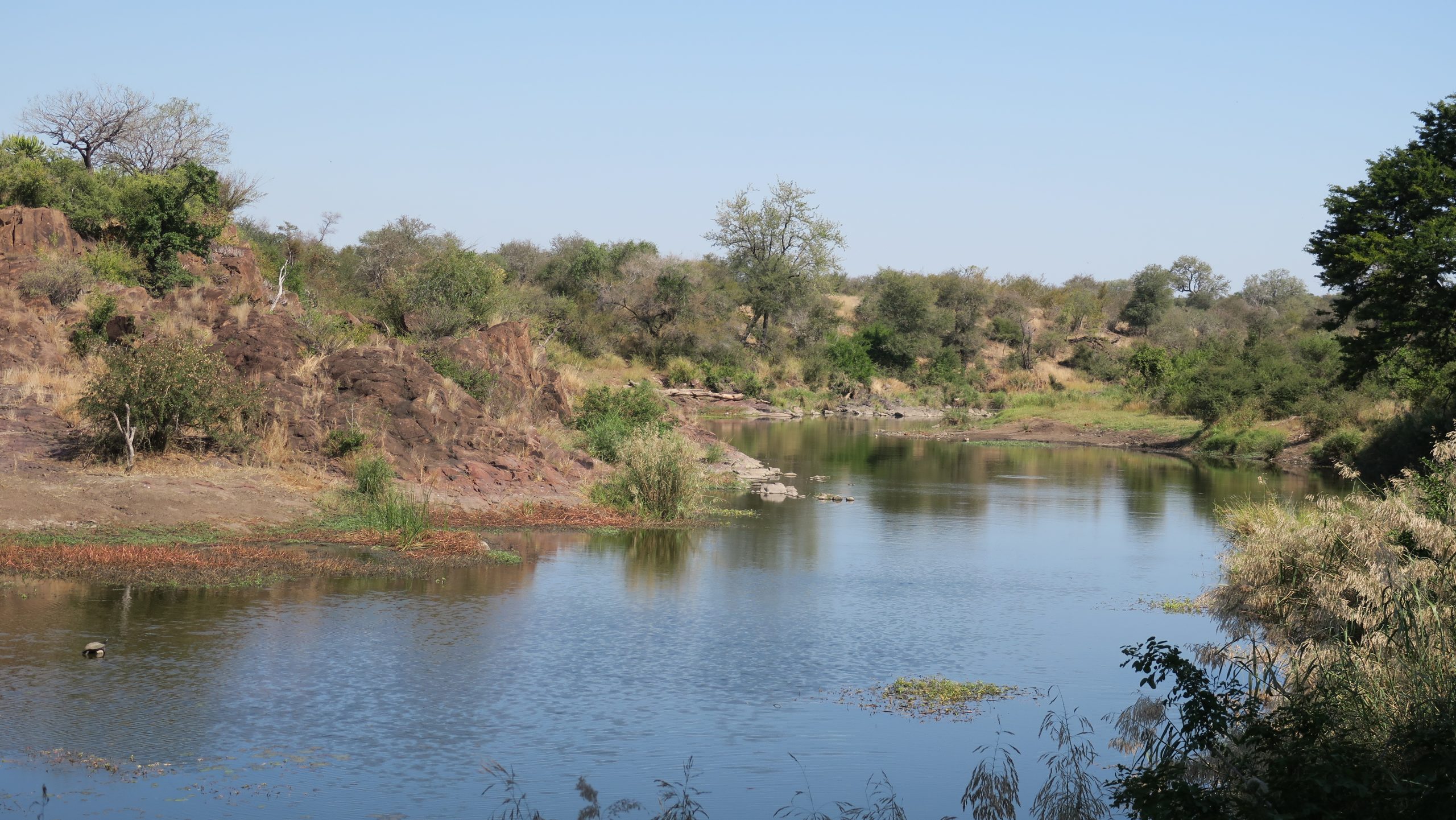
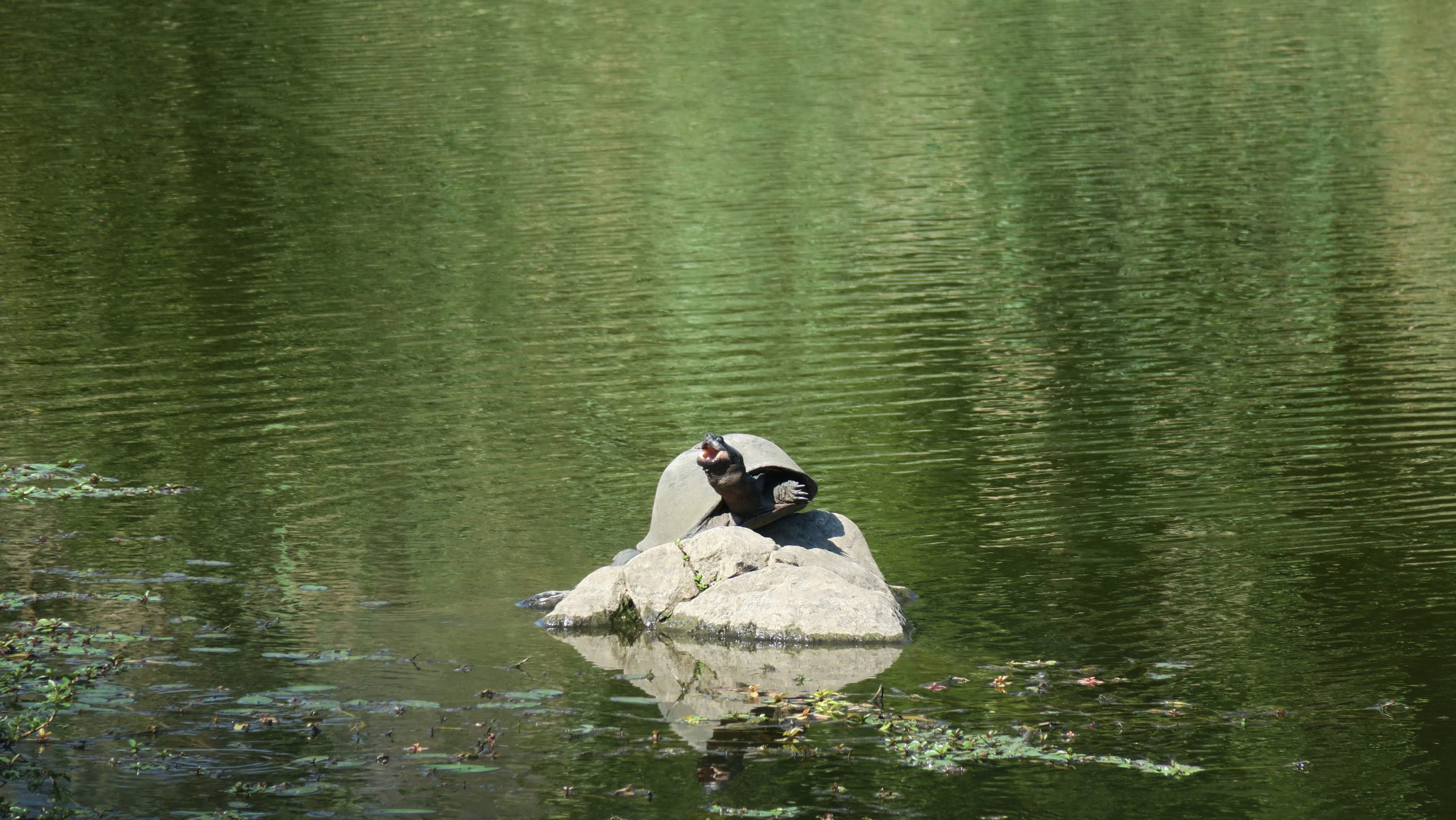
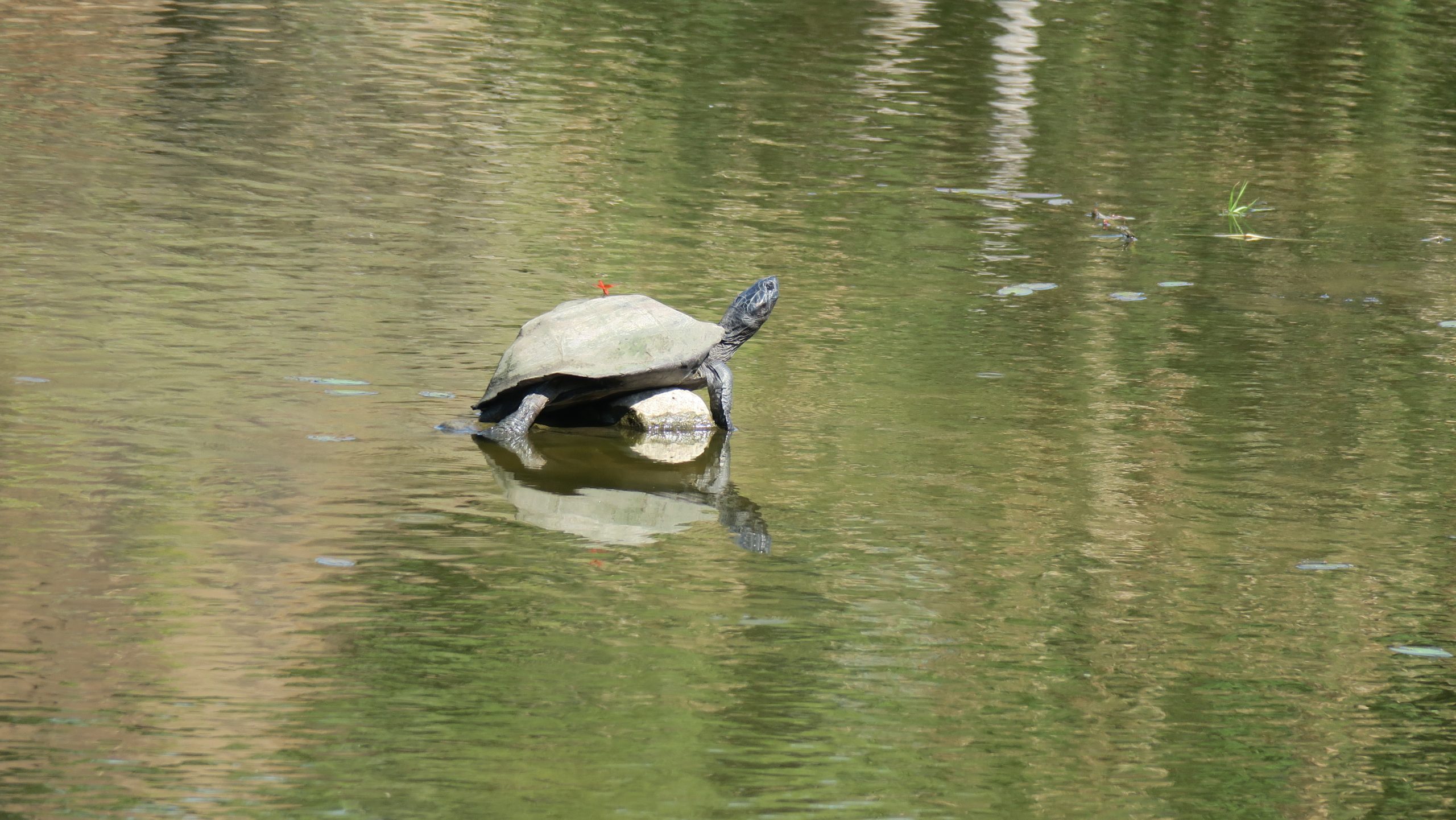
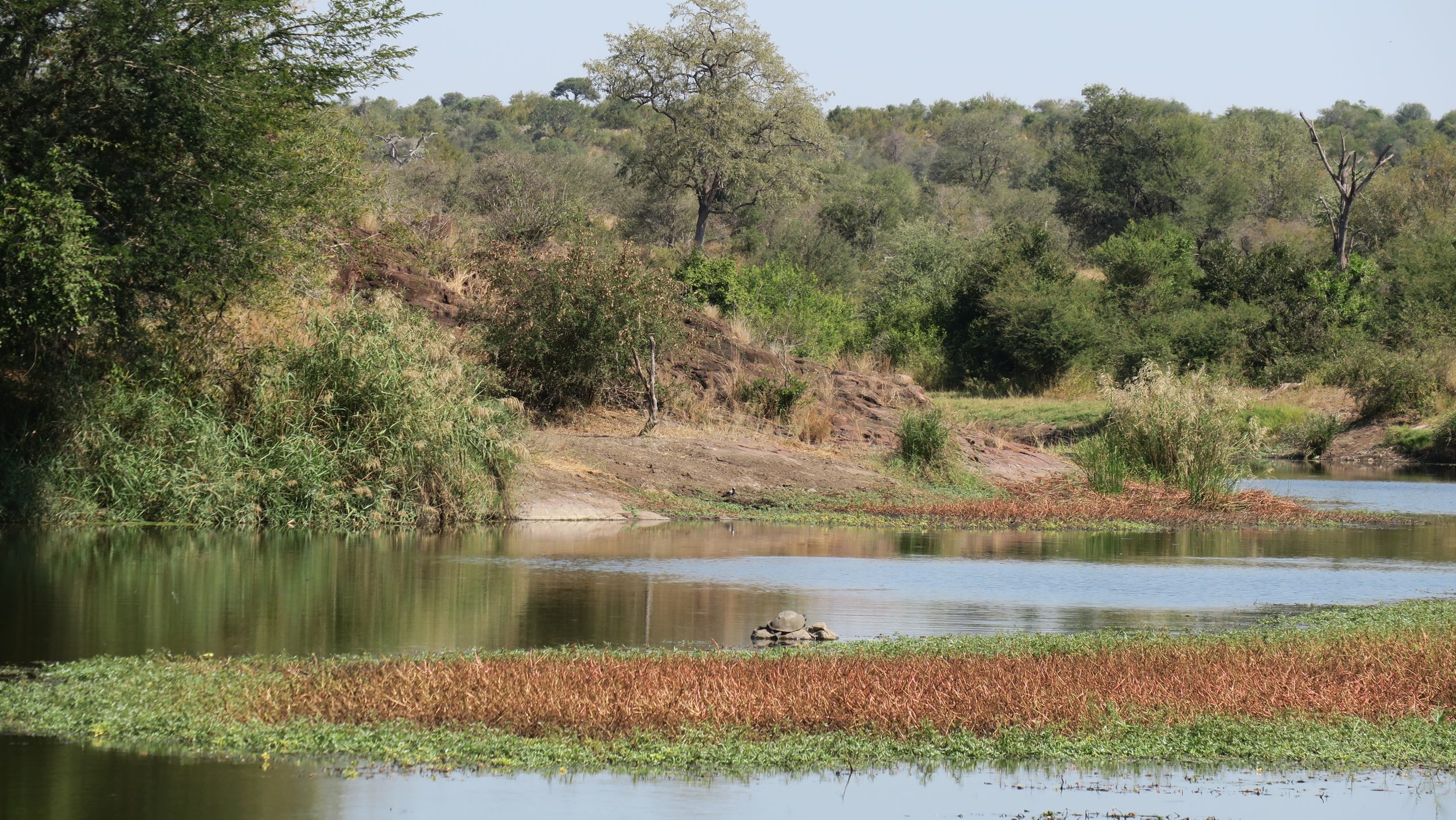
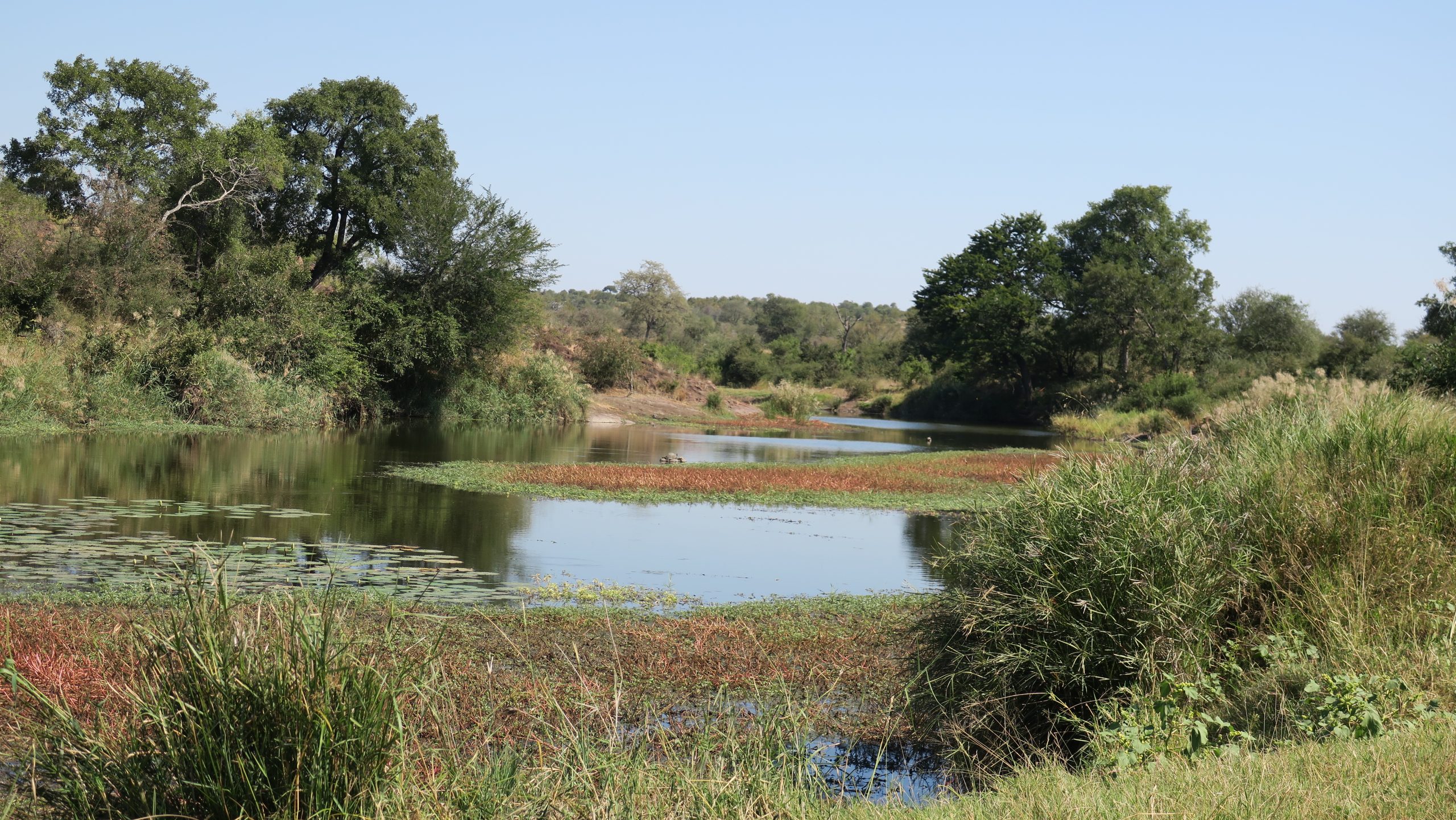
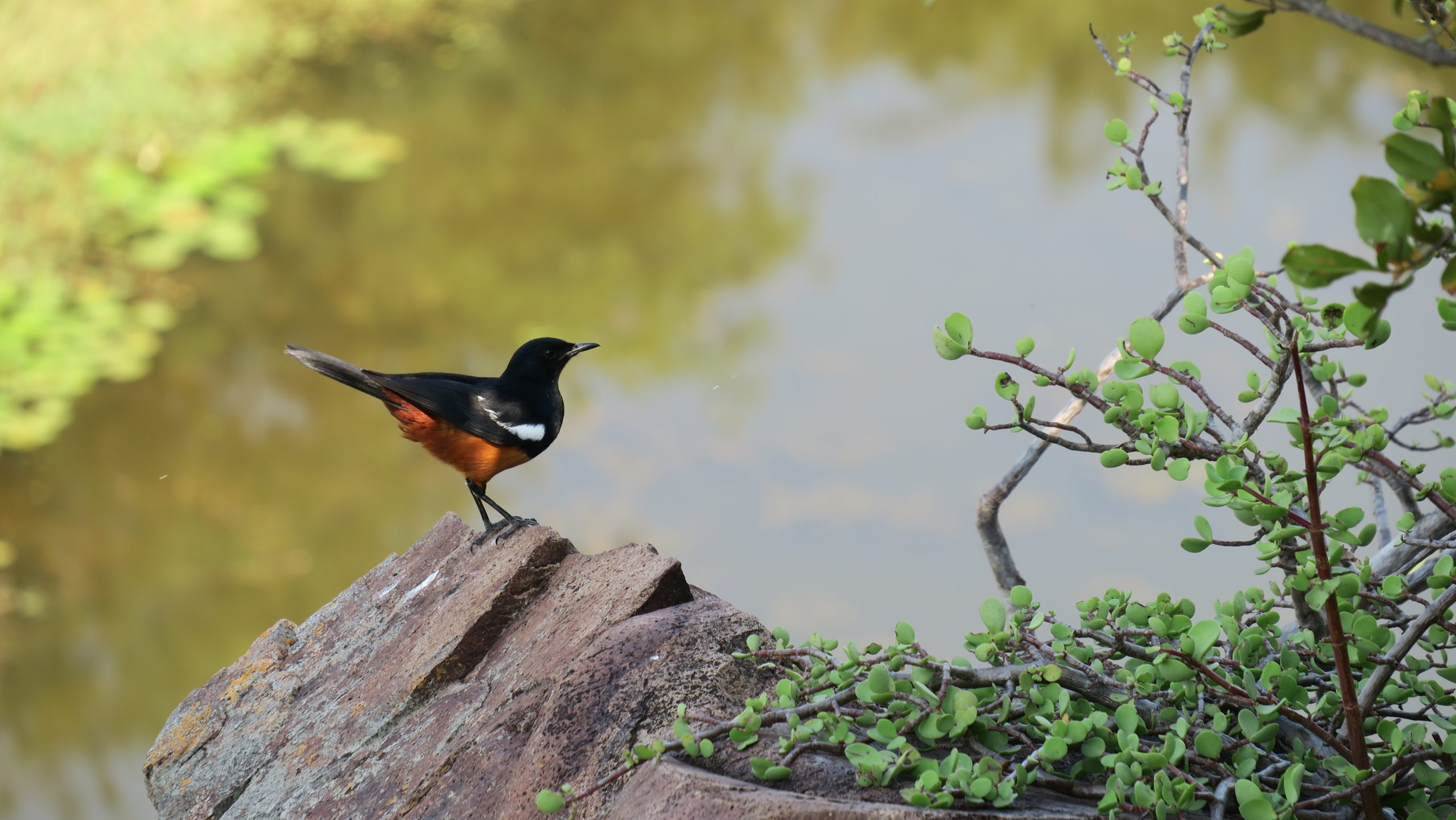
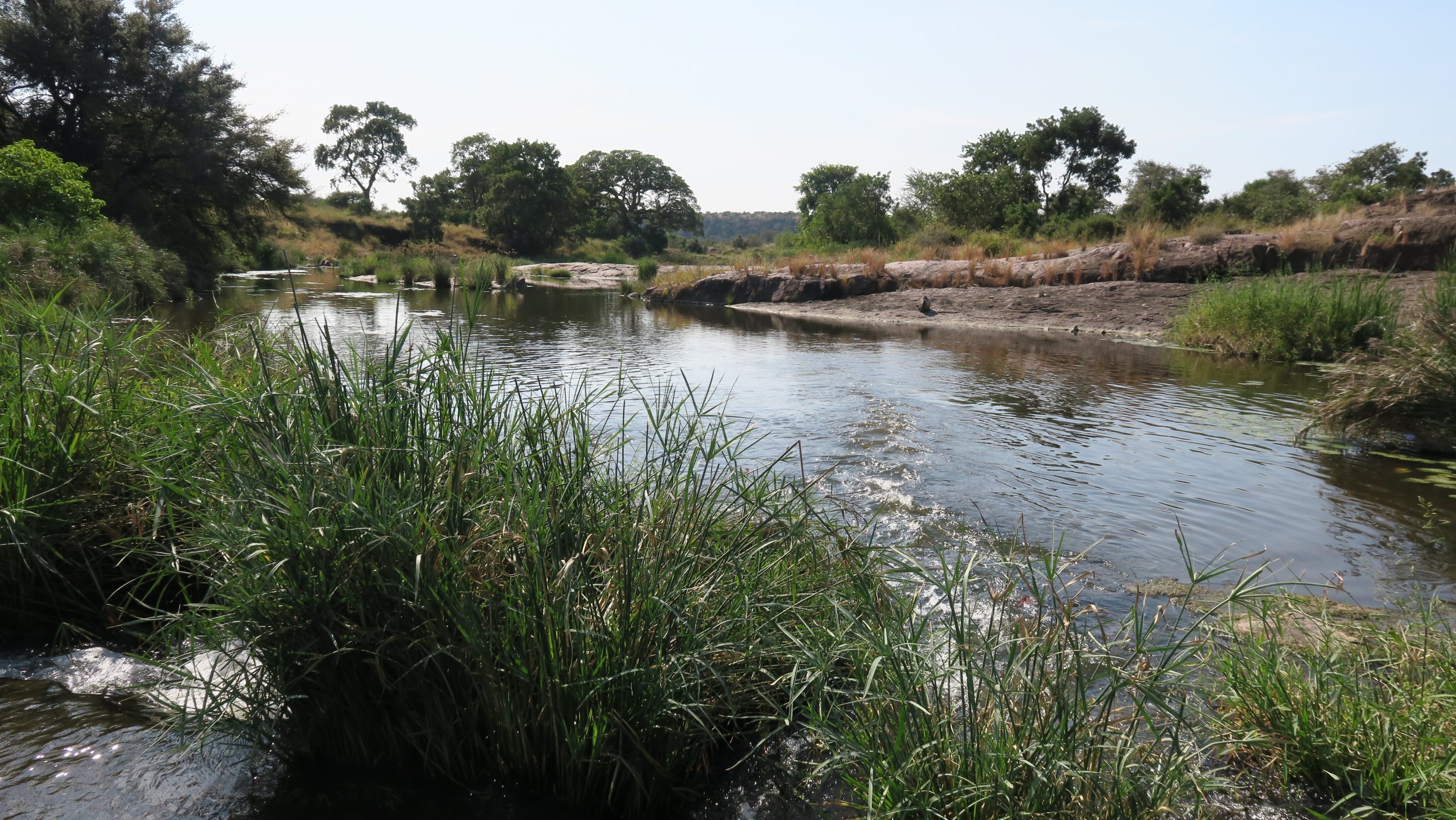
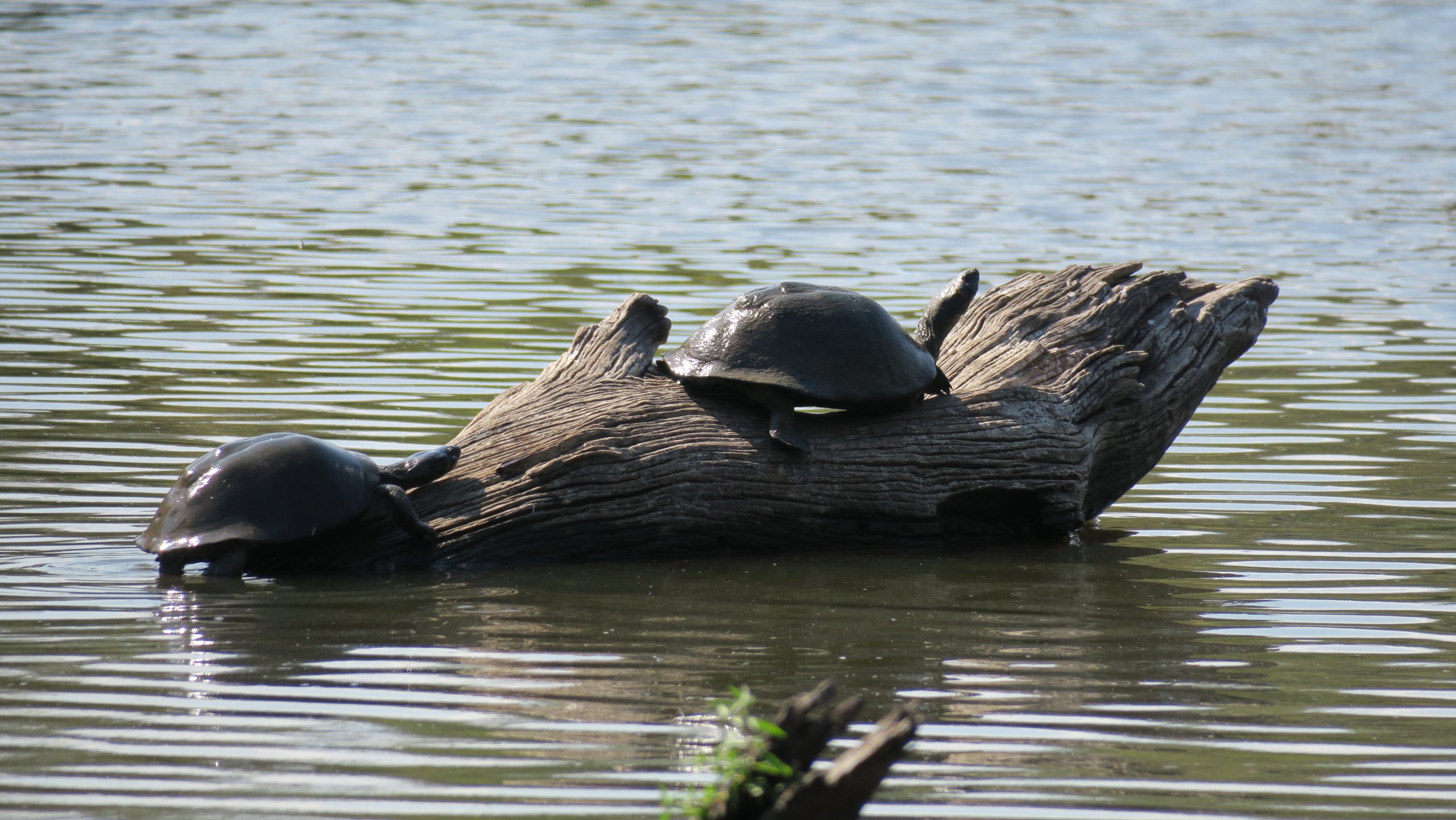
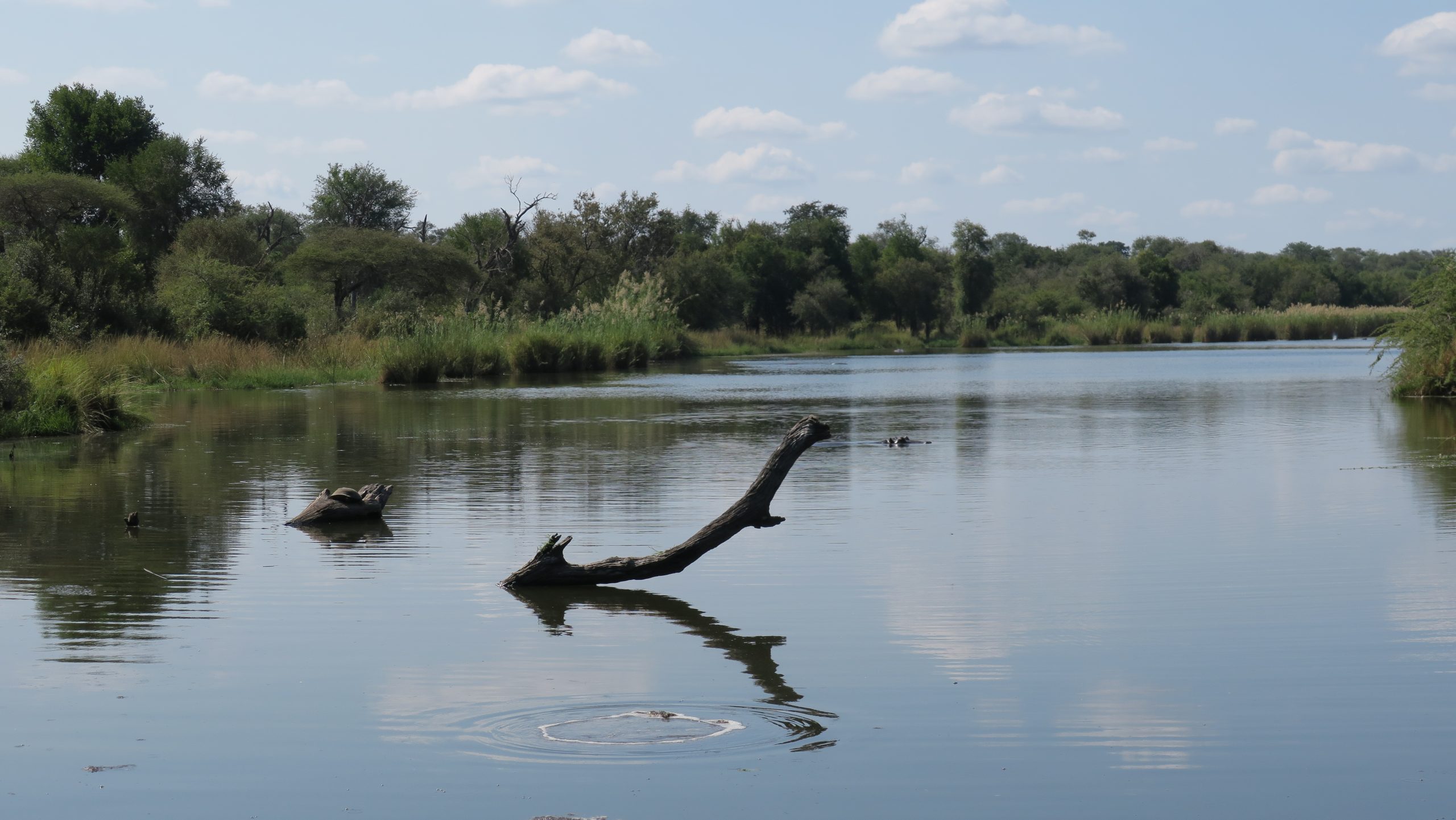
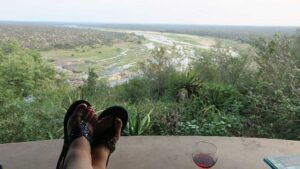
Further on, towards N’wanetsi, we cross low water bridges three times, seeing beautiful birds, fishes and plants close up. At the picnic terrain we make ourselves a nice breakfast on the provided skottel braais and coffee with the provided boiling water. We then walk up the short route to the view point. This is one of the most beautiful views in Kruger – especially in spring as we witnessed last year. Anette identifies a new bird species we have not seen yet. We meet a couple who came from the Maroela camp near the Orpen Gate. Their caravan was raided by monkeys and baboons while they were sightseeing, gaining access by cleverly opening the canvas roof of their caravan and indulging themselves in pawpaws, sugar and other sweet stuff they found while sitting on their double bed! That still did not prevent the couple from continuing their holiday in Kruger. We return to Satara after visiting the Sweni bird hide – a quiet place next to the Sweni river where we see beautiful birds and turtles baking in the sun on rocks in the river.
The next day we drive all the way past Lower Sabie and Crocodile Bridge camps to the Berg-en-Dal camp in the south. Many roads in the southern part of Kruger are still closed due to the floods. We even saw a rhino on the way but will not tell you where. Berg-en-Dal has modern but very interesting bungalows. We are here for only one night before leaving Kruger. While braaiing in the dark, we see two little eyes slowly approaching us. It is a bush baby! It disappears as soon as it realises it has been spotted. A while later I hear munching sounds behind me. Here on the patio is a bushbuck feeding and it doesn’t really care that we take notice of it. Most camps have these bushbucks roaming around. It is so close to me that I can touch it, but it does not allow me to. The next morning I see a Eurasion Golden Oriole in a tree, singing its familiar song.
We are on our way to KwaZulu-Natal and Eastern Cape – a much slower but very interesting and memorable alternative to a return home via the N1.